
Boston & Albany Developer Interview
Mar 08, 2023
We speak to the team behind the upcoming Boston & Albany: Boston – Springfield route for Train Simulator Classic.
Coming soon to Train Simulator Classic the famous Boston & Albany route is set in the last decade of the New York Central era. Featuring the eastern portion of the B&A extending 98 multi-track main line route miles from magnificent South Station in Boston to West Springfield, Mass., as well as including a number of adjoining NYC branch lines. We caught up with G-TraX and the team working on this to find out more.
DTG: Introductions first, tell us a bit about yourself and how you got started with Train Simulator?
Rick Grout (RG): Early on I was a contributor to a couple of major MSTS projects. Since 2009 I have been creating content exclusively for Train Simulator Classic, mostly under my G-TraX Simulations banner, and occasionally as a contributor to projects of my peers. G-TraX products for TSC include the three “Preservation Series” big-steam locomotives, the original Genesis P42DC locomotive, the SP Cab Forward, the RS-1 and its variations, and an assortment of modern freight cars. G-TraX-sponsored routes include Portland Terminal, Durango & Silverton, Stevens Pass and its Cascadian variant, Riverside Waterton & Atlantic, Sacramento Northern, and Bessemer & Lake Erie. I was also a contributor to the Racetrack route and Gary’s Hanover Sub route. None of those routes could have been completed without the contributions from my long-time collaborators, all of whom are also participating in this interview.
Michael Stephan (MS): Train simming has been a hobby of mine since the early 2000s. What has always fascinated me most about TSC and its predecessors is that I can create so many things in it. Route building is what drew me in the most and I have been involved in a number of projects big and small over the years, with BNSF Stevens Pass, the NH Springfield Line and the B&O Mountain Sub being my favorites.
Gary Dolzall (GD): My involvement with creating content for TSC dates to 2012 when I first created scenarios for Steam Workshop. In 2016, as High Iron Simulations, I began creating scenario packs in collaboration with Dovetail Games. In recent years High Iron, with a team of talented creators on board, has also developed several locomotive and equipment packs and two TSC routes, the CSX Hanover Subdivision and the B&O Mountain Subdivision.
Jim Friedland (JF): Previous TSC Routes include Sacramento Northern, Stevens Pass, Alaska Railroad and several G-TraX routes currently not available through Steam.
Wayne Campbell (WC): I’m a retired computer programmer living in British Columbia, Canada. I have been involved in train simulators for 22 years. In that time I worked on over 16 routes including the B&O Mountain Sub, the Alaska Railroad, and the CSX Hanover route.
DTG: What was your role on the Boston & Albany route?
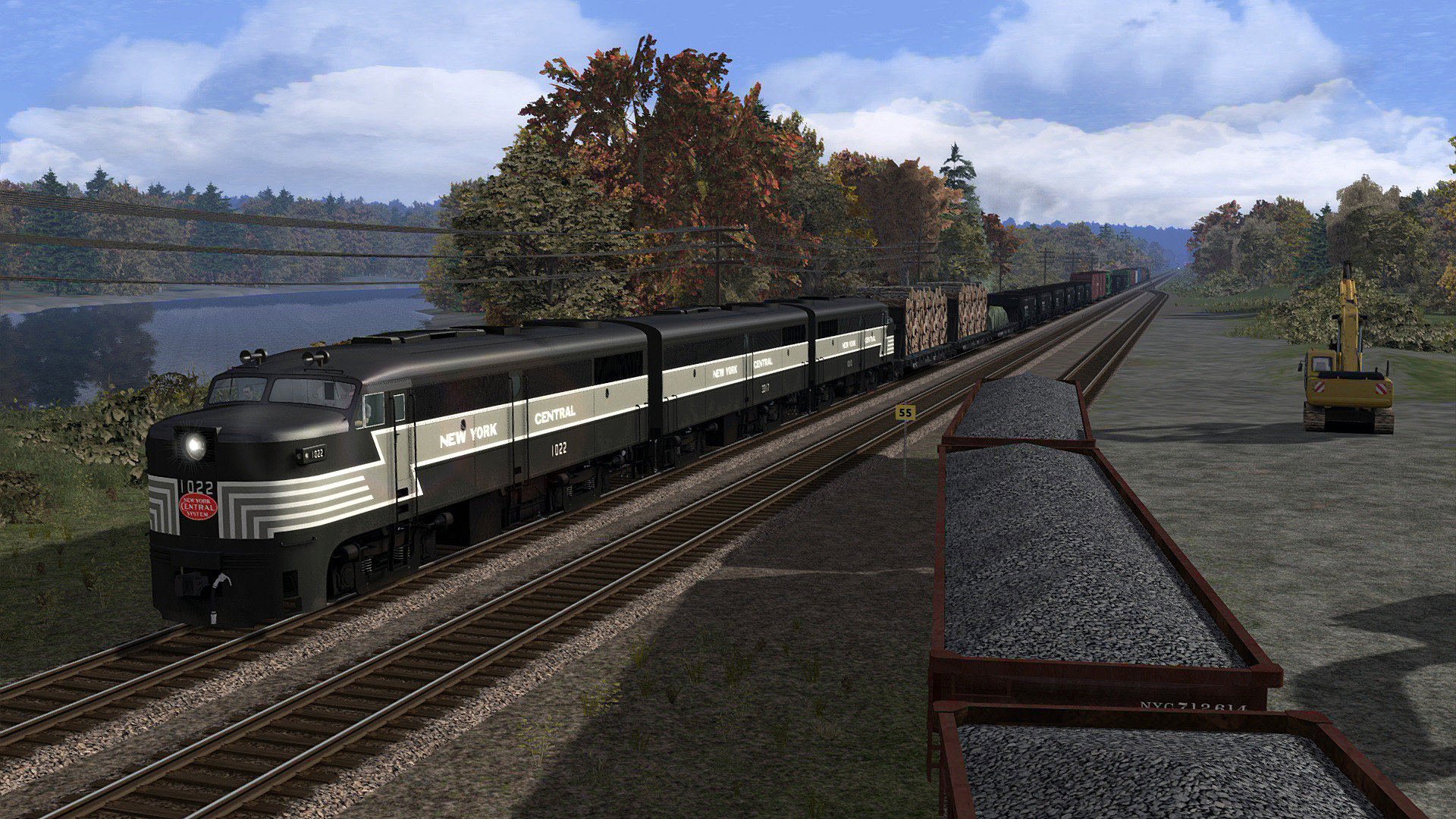
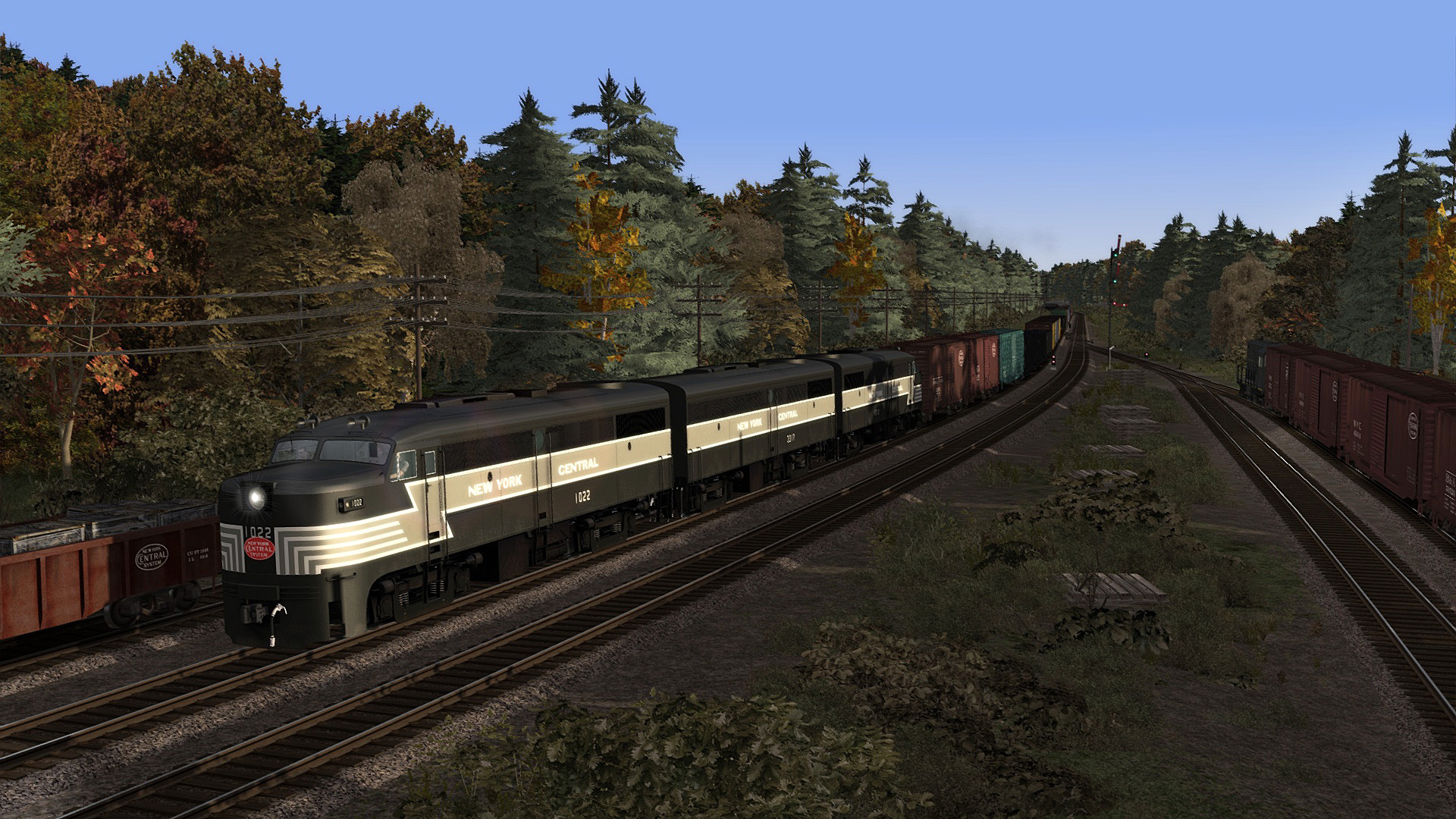
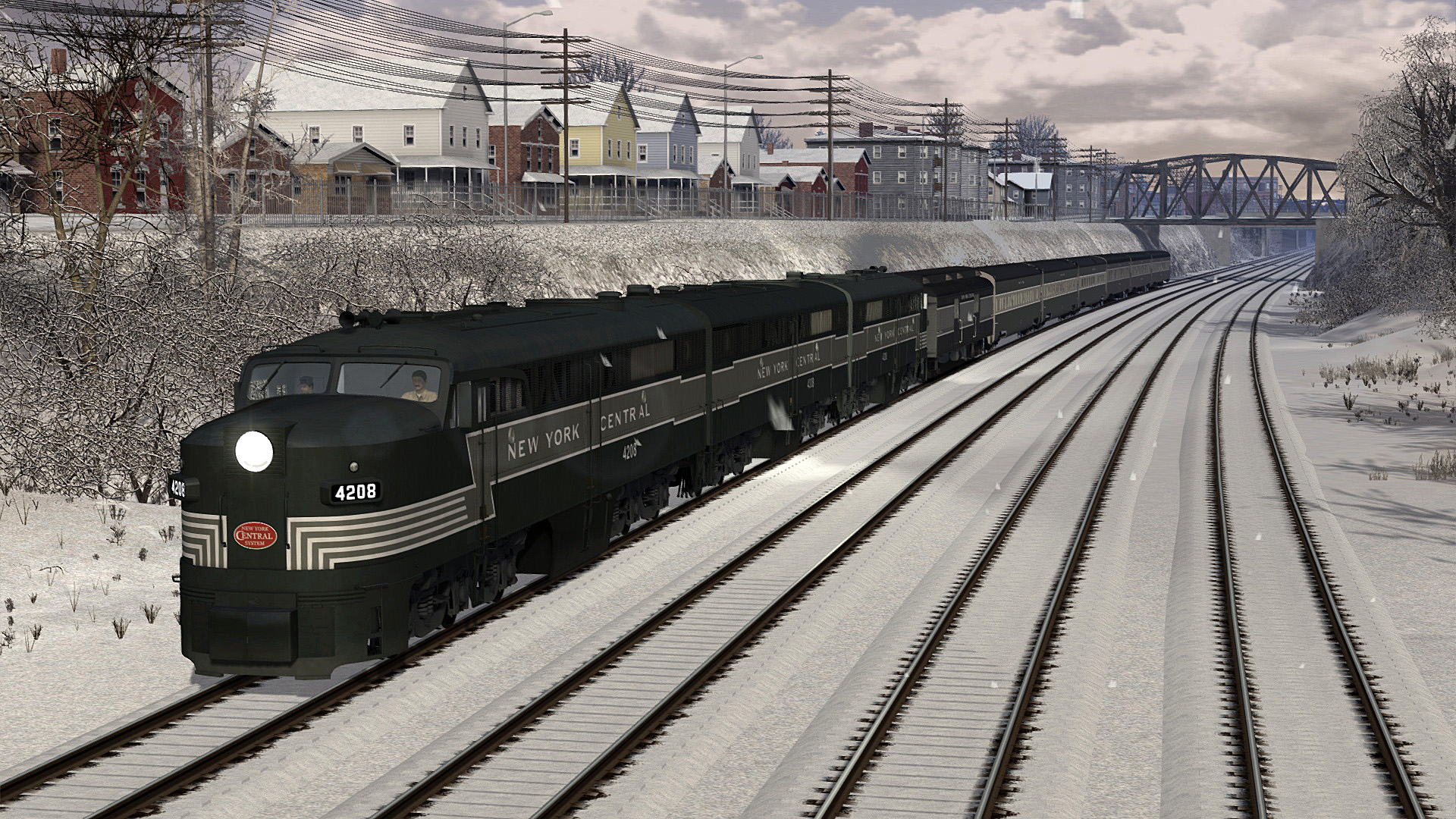
RG: I provided most of the scenery and the iconic buildings in Boston proper, as well as miscellaneous scenery work elsewhere along the route. In addition, I built the models that comprise Springfield Union Station, the smaller but ubiquitous two-tone granite stations, and a variety of freight houses including the Dutch-influenced one at Framingham. I also made the new ALCo PA locomotive, with its NYC “lightning stripe” livery, and the previously released ALCo HH600 in B&A livery.
MS: I was in charge of track placement, signaling, the freight cars, as well as scenery work around Springfield, Worcester and the stretch from Newton to Natick.
WC: My main contribution was terrain texturing and placing the natural vegetation: trees, grass, bushes, etc. In addition, some of my model-building work is evident. I built the station models at Framingham and Palmer and also the Worcester Union Station and City Hall.
GD: My role on the B&A project has been scenery design and placement, working on the middle section of the route between North Wilbraham and Charlton. As a resident of New England myself, it was a joy to re-create the quintessential New England countryside in this section of the route as well as the rugged environment of Charlton Hill.
JF: My primary role involved creating the scenarios provided with the route. In connection with this I provided signal and route error detection. Being the developer living closest to the actual route, it was my great pleasure to tour today's CSX route from Springfield to Boston, gathering photographs and histories of the 1950s from communities along the route. In addition, I developed the scenery around several rural communities and industries.
DTG: Why was Boston & Albany picked?
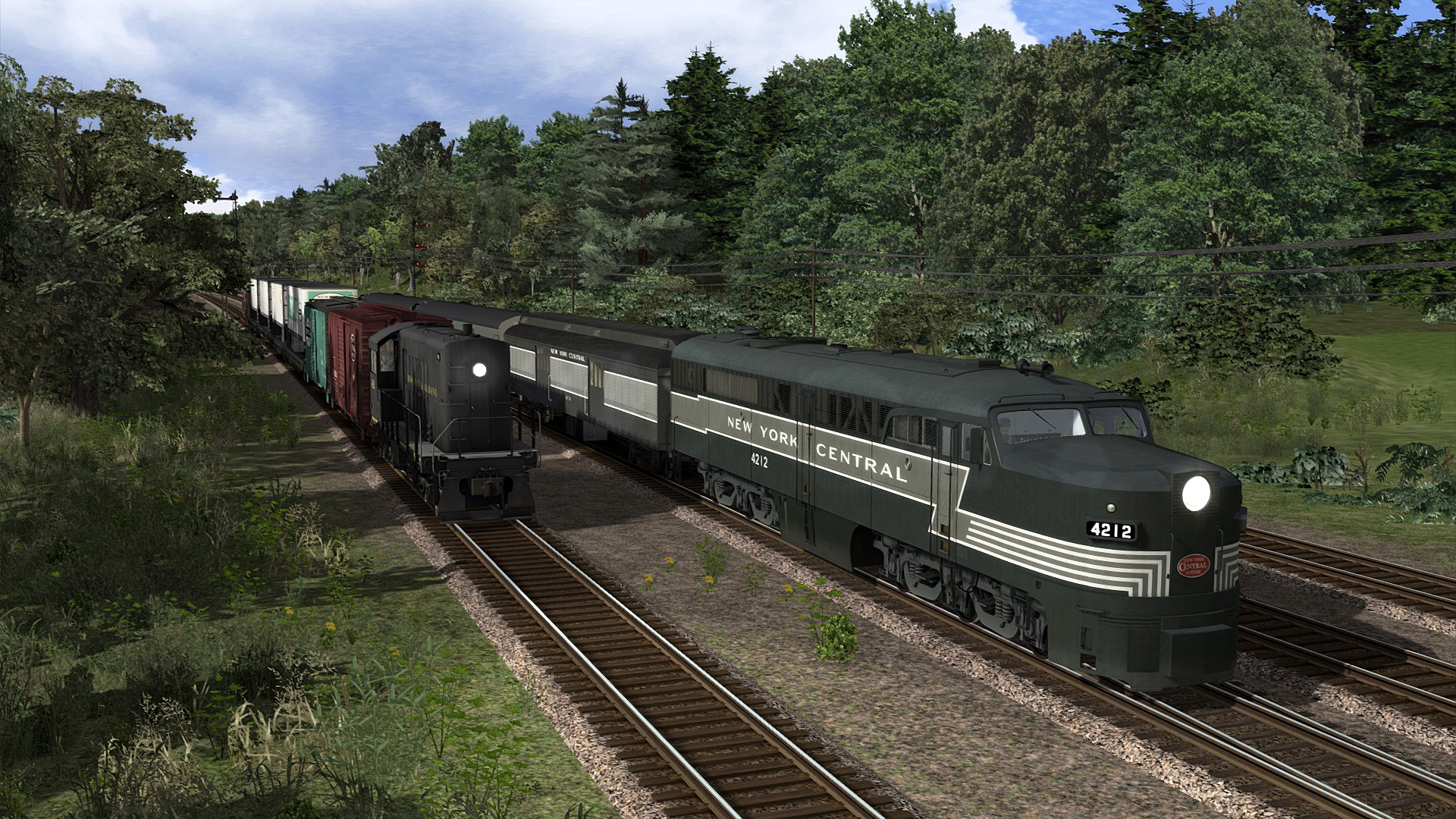
MS: The Boston & Albany has been on many of our “wish lists“ for a long time as it is a very fascinating railroad that has a bit of everything: big city scenery and commuter action; long distance passenger and freight; and the beautiful Massachusetts countryside. And of course there's the line's operator, New York Central, which is one of North America's most famous fallen flags and one that has been a bit under-represented in TSC so far.
JF: From a personal perspective, the Boston & Albany attracted me thanks to a Christmas gift given to me by my grandfather in about 1955. It was a Lionel O scale locomotive, the AlCo PA, which I have always regarded as the most lovely diesel loco ever created.
RG: As a former resident of both Worcester and suburban Boston, Michael’s idea appealed to me because of my familiarity with the route’s locale. The project also gave us the opportunity to feature Jim’s beloved ALCo PA in TSC for the first time.
DTG: What kind of research had to be done for the trackwork and signals?
MS: This was one of the routes that was easier to research because thankfully a plethora of information is available for the New York Central. We had a detailed track chart at our disposal, which among many other aspects showed the exact gradients, track layout and signal installations, including the locations of semaphore and searchlight signals. Several employee timetables provided additional important operational insight.
JF: In several communities along the B&A route, it was possible to visit and photograph structures and sidings that previously served industries, such as the mills, along the ROW. Local libraries also were able to provide additional resources.
DTG: How did you approach scenery creation?
RG: In addition to photos from Gary’s collection and on-site photos by Jim, we assembled information about the route from Internet sources and from reference books that we acquired.
JF: Most of the route’s mid-century rail stations still exist. Many of them have been preserved to perform other functions, but are still in their original location and retain their 1950's atmosphere. Slightly more difficult to locate were the many local freight houses, some obscured by 70 years of neglect and intrusions of nature. There are a number of large mills which were, and in some cases still are, important to the economy of the region. The mills are important scenery and operational features of the route, and in many cases we were able to get photographs on site.
JF: Most of the route’s mid-century rail stations still exist. Many of them have been preserved to perform other functions, but are still in their original location and retain their 1950's atmosphere. Slightly more difficult to locate were the many local freight houses, some obscured by 70 years of neglect and intrusions of nature. There are a number of large mills which were, and in some cases still are, important to the economy of the region. The mills are important scenery and operational features of the route, and in many cases we were able to get photographs on site.
WC: I am somewhat familiar with the area from travels to the Boston region, though I also relied on satellite images and street views. One of my interests is also to use computer programming and online mapping data to automatically generate realistic looking scenery. Much of the terrain texturing and vegetation on the B&A was placed by my software.
DTG: What landmarks should players look out for when exploring?
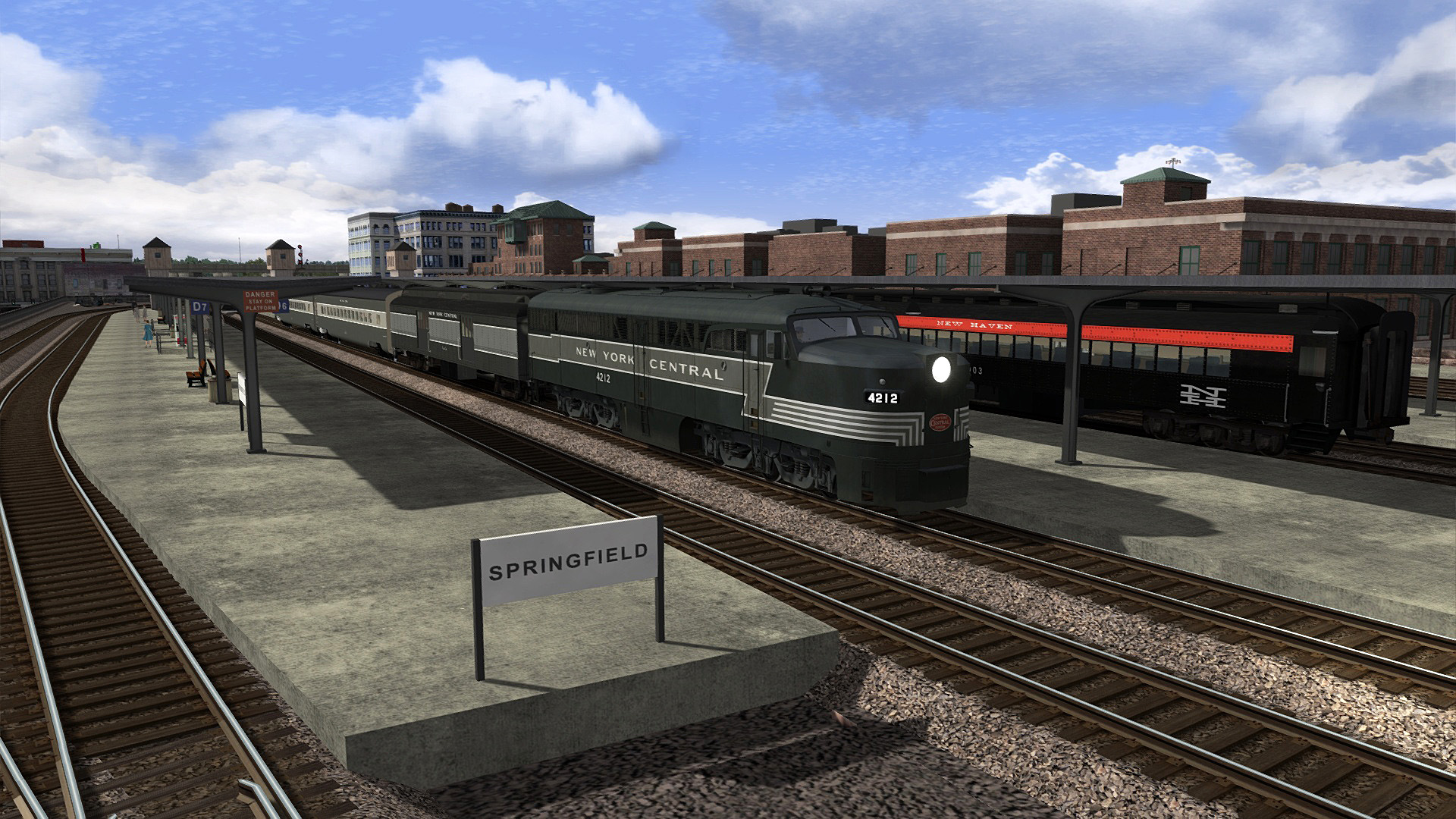
RG: Where to begin? The whole route! Beantown obviously. I loved the challenge of creating a major city using low-poly procedural buildings, with increased visual and historical detail where the railroad passes through the downtown area. The station I enjoyed creating the most was Boston’s South Station, which was opened in 1899. Although the building façade still looks much the same now as it did back then, the platform area and yards are now completely different. We had to sort through a lot of information from different sources to give you a good idea of what things looked like in the ‘60s.
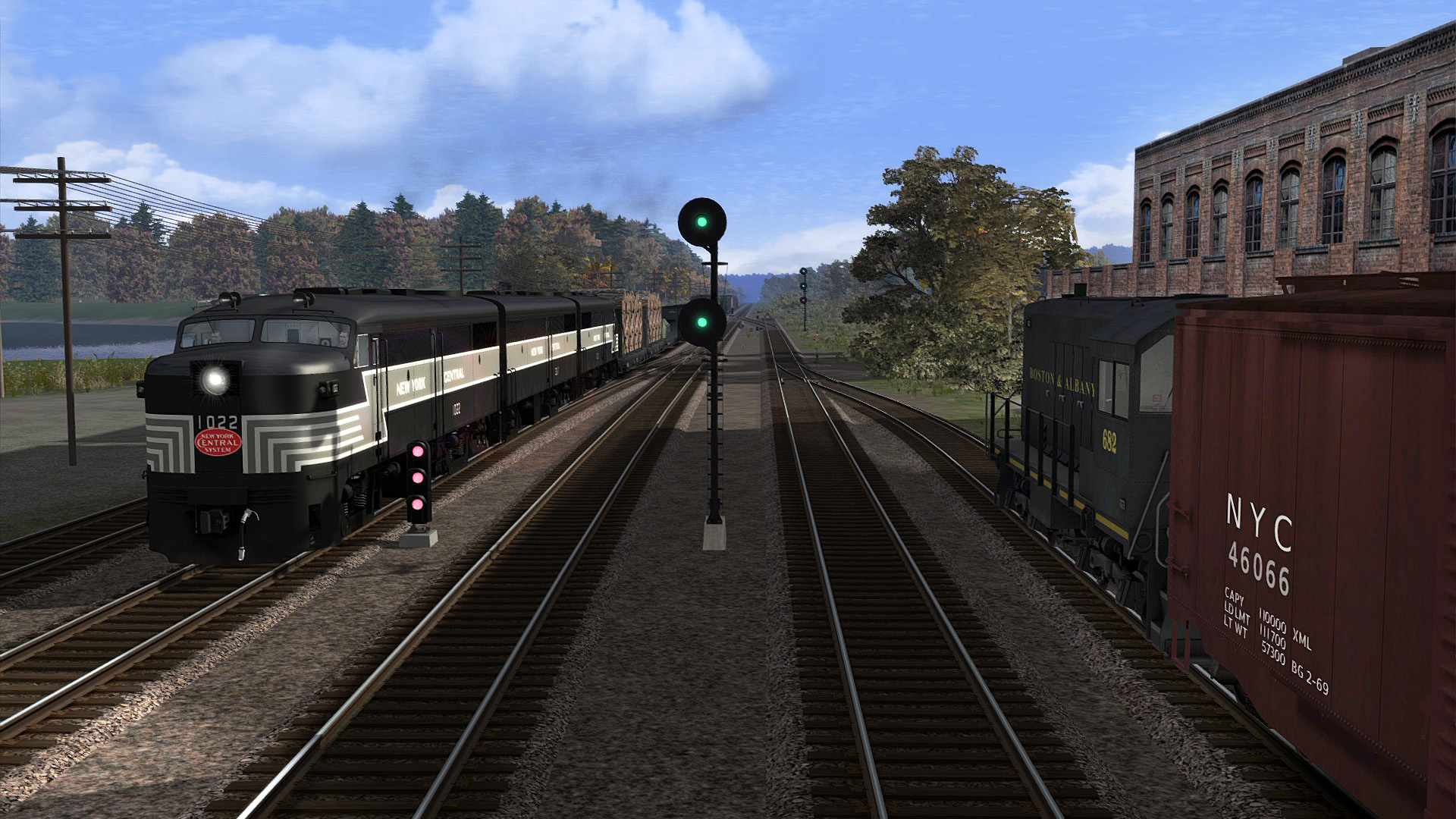
MS: This route has a bit of everything! The three big cities–Springfield, Worcester, and Boston–are the logical choice to begin exploring as there is so incredibly much to see and do in all three of them. That’s particularly true of Boston, with its miles and miles of suburbs and neighboring towns that seamlessly blend together. The three big cities also have a staggering amount of railroad infrastructure, which should be heaven for those who enjoy creating switching scenarios. However, there are many other highly interesting spots along the line, including idyllic smaller railroad towns like Palmer, where the B&A interchanged with the CV, and the branch lines with a rural feel to them.
JF: Downtown Boston certainly will be a highlight for most players. Other communities along the route are also well portrayed, including Worcester and Springfield. Equal care was used in recreating smaller communities along the route and it's branches.
DTG: How were scenarios created for this route?
JF: For the scenarios along the mainline, the objective was to provide both freight and passenger operations that were typical of the time, using actual timetables modified only slightly. To accomplish this, long runs were broken up into parts of shorter duration, and with an accompanying story line to explain the breaks. It was important to feature at least one branch line operation among the provided scenarios, as the B&A still provided essential services to small communities somewhat distant from the mainline.
DTG: Was it challenging to set the scenarios to the era?
JF: Having access to the Employee Operations Timetables was particularly helpful in providing accurate running times and station stops for various classes of train operations. Being multi-tracked, AI trains could also be portrayed with some precision.
DTG: What locomotives can players look forward to?
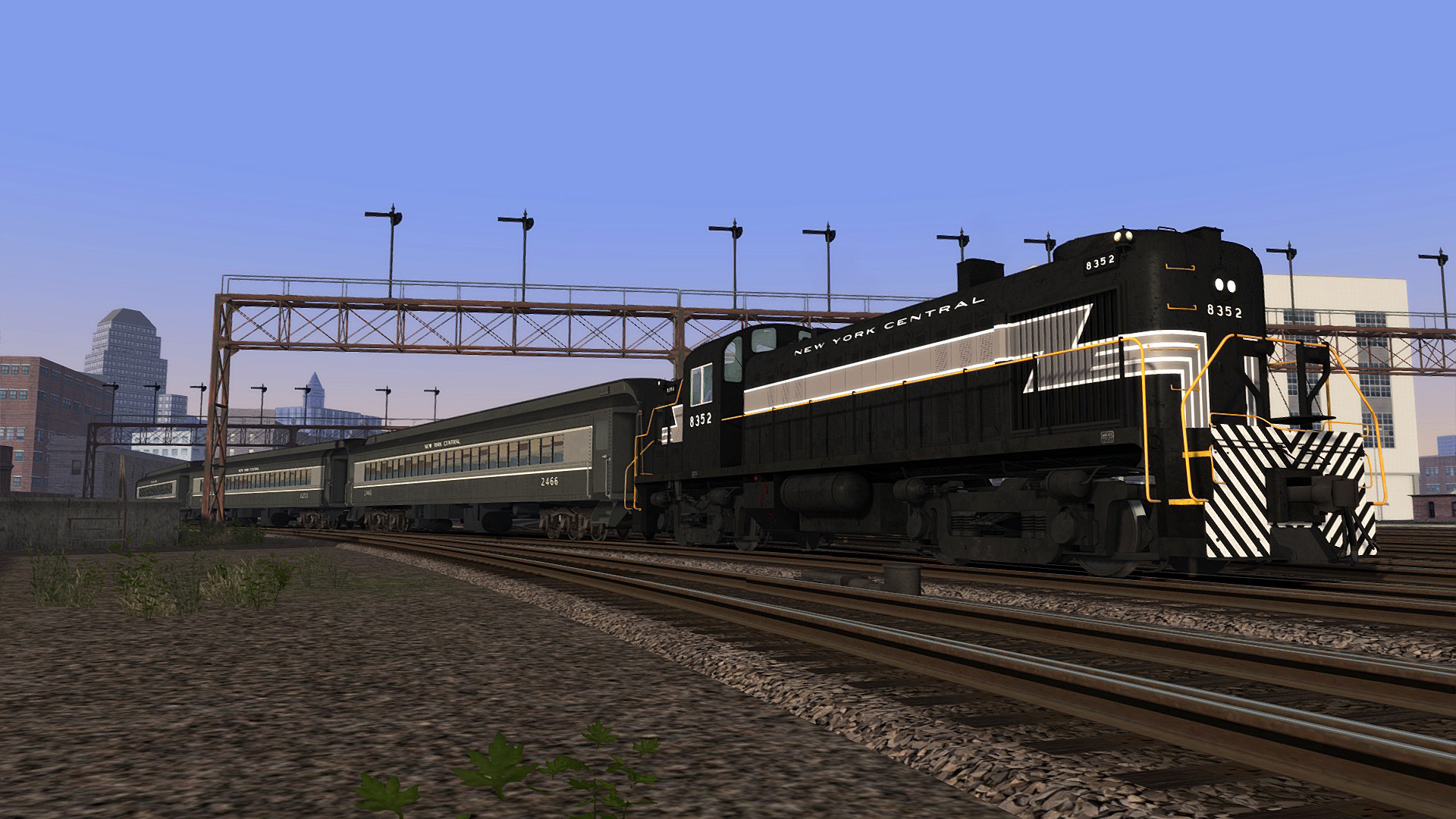
RG: There are four locomotives: The G-TraX PA and HH600, the FA by Cesar “Mannu” Pach of Digital Train Model, and the RS-3 by Fernando Martins of Diesel Workshop.
MS: The locomotives on this route cover all the important operational needs. The ALCo PA was mainly used in long distance passenger service; the FA was the mainline freight workhorse; the RS-3 fills the road-switcher role and was primarily used for local freight and commuter trains; and the HH600 was a pure switcher.
DTG: What is unique about the ALCo locos featured?
RG: They’re all different! As for the PAs, they were notorious–and loved by railfans–for their tendency to emit thick black exhaust smoke when accelerating. This was caused by the fuel-air mixture being overly rich during the time it took for the exhaust-powered turbocharger to gradually get up to speed, a condition known as “turbo lag.“ We tried to simulate this effect and I hope you’ll like it. The PA model also has a “retractable” front coupler that normally resides inside a protective cowl which you can open and close.
DTG: Any tips for players driving these for the first time?
RG: Thanks to custom scripts by Mike Rennie, the PA, FA and HH600 locos are equipped with brakes that operate very much like their prototypes. This may take some players a while to get used to–I know that was the case for me. I highly recommend that players read the Project Manual in which Mike has provided detailed instructions for using the brakes and related systems.
DTG: Did you have chance to visit any of the locos for research?
RG: A PA is being restored at the railroad museum in Portland, Oregon. I was able to take many photographs of the cab interior and its details, so the cab in our PA model should be pretty close to what the original looked like. Unfortunately, much of exterior of the museum’s locomotive had been damaged and needed to be re-fabricated or replaced, so we had to rely on photos and drawings to get things right.
DTG: In addition to locos, what rolling stock is included?
MS: The route ships with a wide range of rolling stock which we think provides a good representation of real-world consist makeup of the period and covers all the key traffic movements on the line. Our roster includes light- and heavyweight passenger cars, boxcars in several different liveries, open and covered hoppers, gondolas, flatcars, tank cars and of course the obligatory cabooses.
DTG: What is your favorite feature of this route?
GD: The B&A route is remarkable for its scenic variety and operational diversity, including the historic urban environment of Boston, the beautiful New England countryside, and the climb over Charlton Hill. The B&A was (and is) one of America’s great rail lines and the route, at long last, brings the legendary New York Central in all its glory to Train Simulator Classic.
JF: My number one favorite is the Spencer Branch line. Today this branch line is a beautifully maintained walking trail which, except for the missing rails, looks very much like we have portrayed it in the B&A era. The woods, the lake, and the village are all still there to enjoy. The background on the branch line's creation is also compelling. The Spencer Branch is a community's reaction to having not been included as a part of the mainline, with the creation instead of a small branch railroad to bring the prosperity that early 20th century transport promised. Having proved its value, the branch was purchased by the New York Central as a part of the Boston & Albany. And I can’t leave out my number two choice: Ludlow and the Ludlow Mill. The mill, which produced jute twine, is still the dominant structure in the community. The mill's railyard was served from the B&A mainline across a trestle over Chicopee River. The trestle still exists, but it’s out of service.
WC: I had a lot of fun building the Worcester Union Station model with its impressive 212 foot high double spires. In reality, those spires were not present during the era of our route, having been removed in 1926 due to structural failure, and then reinstalled in 2000 when the station was renovated. Despite this, I just couldn't leave them off because they are too iconic. So I included the spires, but as a separate scenery part. Anyone wanting the true historically accurate version of the structure can easily flip over to the TSC editor and delete the spires. But for me the structure is incomplete without them.
MS: To me, the most striking scenes are always where we pass through the three big cities. Traveling eastward, we begin in Springfield's compact downtown alongside the Connecticut River. An hour later, we come to Wayne’s beautiful Worcester Union Station as we cross through the city’s industrial and residential areas. Then, as we approach Boston, we travel through a seemingly endless suburbia with its often historic town centers, watching the downtown skyline rise before us. As we get closer, we pass by Boston University (with Harvard and MIT in the near distance), Fenway Park, and through the Prudential Center tunnel. Suddenly we find ourselves right in the heart of town. Our train is dwarfed by the surrounding buildings along the way and just ahead of us is our final destination: majestic South Station with its maze of tracks. Quite a journey!
RG: I fully agree with the sentiments expressed by my colleagues and I couldn’t have said it better!
Boston & Albany: Boston – Springfield is coming soon to Train Simulator Classic. Read our announce article to find out more about the route.
Stay up to date with everything Train Simulator Classic by joining us on Facebook, Twitter, Instagram and YouTube.
