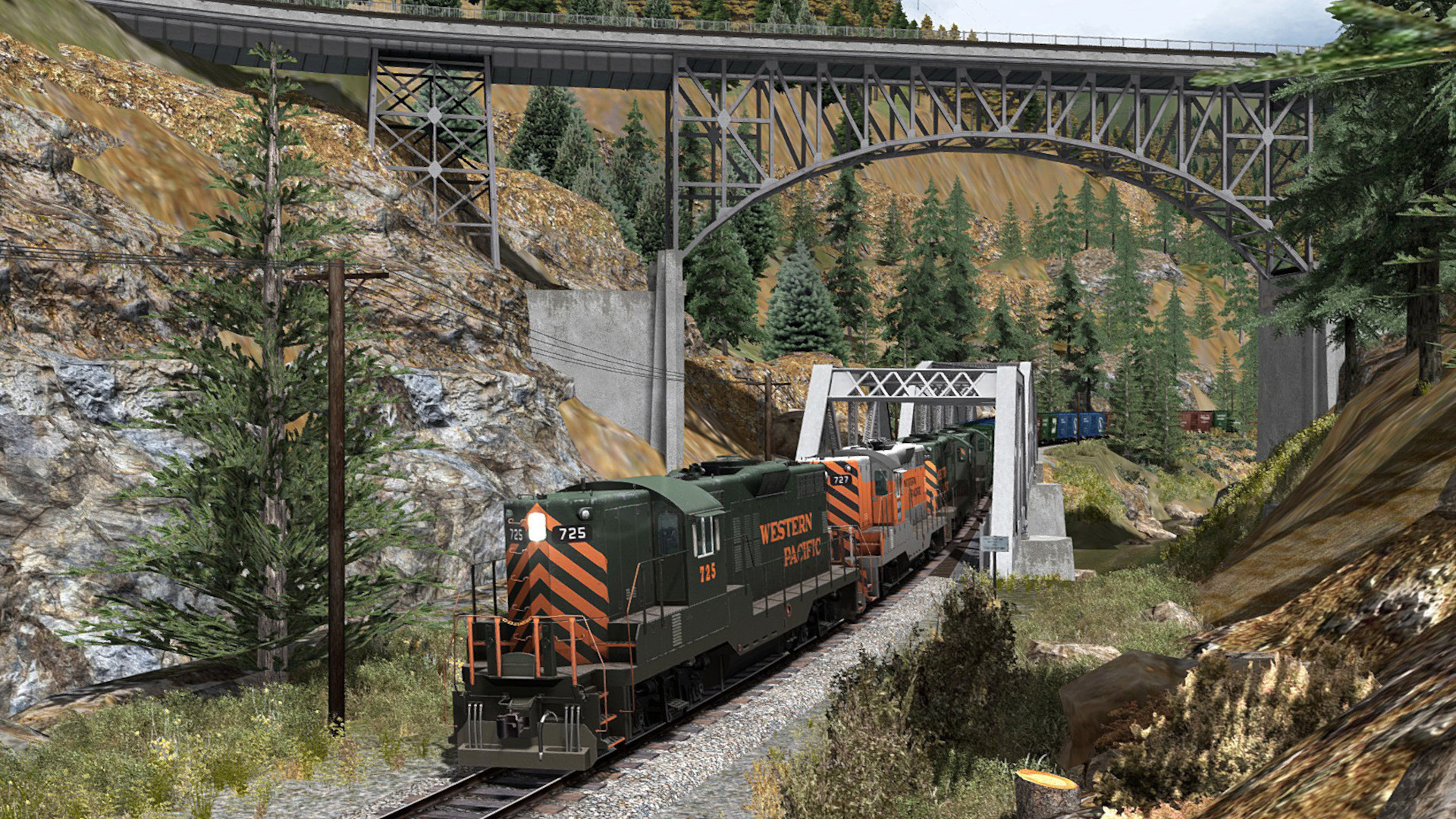
Feather River Enhanced - Up Close
Feb 07, 2024
An extended and enhanced new edition of majestic Feather River Canyon is coming to Train Simulator Classic – and we take an up-close look at the route!
“No man will ever be fool enough to build a railroad through that canyon.“ — Collis P. Huntington
That railroading entrepreneur and legend Collis P. Huntington, one of the “Big Four“ builders of the historic Central Pacific and a primary force behind construction of the great Chesapeake & Ohio Railway, believed no one would ever build through “that canyon” – which is to say California’s Feather River Canyon – speaks volumes. Western Pacific’s Feather River Canyon route through and across the Sierra Nevada Mountains was, and is, one of North American railroading’s greatest wonders.
And soon, in an expanded and enhanced edition created through a collaboration of Dovetail Games and High Iron Simulations, the extraordinary Western Pacific through Feather River Canyon is coming to Train Simulator Classic!
As recently announced here at Dovetail Live, the new edition of the Feather River Canyon route will feature Western Pacific’s entire Third Subdivision between Oroville and Portola, California, a portion of the WP’s Fourth Subdivision “Inside Gateway,” and the adjoining Quincy Railroad short line – a total of 130 route miles packed with detail-rich scenery and loaded with realistic operating challenges.
Let’s take a look at just some of the famous locations and highlights along the upcoming route, which is set in the 1970s-1980s Western Pacific era:
Portola
Eastern terminus of the Western Pacific’s Third Subdivision and of the newly expanded and enhanced Train Simulator Classic, Portola was a key operating point on the WP with large yard, engine and repair facilities, a large depot and, interestingly, Western Pacific’s own hospital. Today, a portion of the yard and terminal is home to the Western Pacific Railroad Museum.
Clio Trestle
West of Portola, the line briefly follows Willow Creek, then encounters the Middle Fork of Feather River. Approximately seven miles west of Portola is famous Clio Trestle, which stands 172 feet tall and is 1,000 feet long. Built in the first decade of the 20th century, the Western Pacific was constructed to high standards, and magnificent Clio Trestle has long been a siren for camera-carrying railroad enthusiasts and tourists alike.
Williams Loop
One of the engineering marvels of the WP’s passage through Feather River Canyon is Williams Loop. Much like Tehachapi Loop on the Southern Pacific, Western Pacific’s Williams Loop is a full spiral, allowing the railroad to gain altitude with moderate grades as the WP line climbs to the summit of Beckworth Pass.
Quincy Junction
At Quincy Junction, the Western Pacific connected and interchanged with the 4-mile Quincy Railroad. Although short in miles, the Quincy Railroad was (and is) home to extensive lumber businesses, and the interchange was a busy one. The Feather River Canyon Enhanced Route includes the full Quincy Railroad line, which has also been further detailed and enhanced.
Keddie
On a railroad of famous places, Keddie is perhaps the most famous. Keddie’s fame is in no small part based on magnificent and unique Keddie Wye Trestle, which served to join the Third Subdivision and the Fourth Subdivision (“Inside Gateway”). Keddie also hosted a handsome depot, fueling facilities, and a yard.
Heart of the Canyon
West of Keddie, the Feather River Canyon in all its remote and rugged glory stands, and the memorable locations are countless and renowned … Twain, the Honeymoon Tunnels, Belden, Rock Creek, Cresta, Poe, and more. And while remote, the heart of the canyon also served to provide lumber and aggregates tonnage for the railroad at locations such as Grays Flat.
Pulga
Just below and west of Cresta is another of Western Pacific’s extraordinary scenic highlights at Pulga, where the railroad bridges the Feather River while Highway 70 spans high overhead.
North Fork Bridge
In the early 1960s, due to the construction of the Oroville Dam and Lake Oroville, the western portion of the WP’s Third Subdivision was relocated. It was at the east end of the newly built North Fork Bridge, a spectacular concrete arch structure, that the new and old lines met. Eastbound trains emerge from 8,830-foot-long Tunnel No. 8 onto the imposing North Fork Bridge.
The Relocated Line
Western Pacific’s relocation due to Lake Oroville extended from the North Fork Bridge west through Butte Valley to Feather River Bridge on the east side of Oroville. Built with modern technology, the line via James and Kramm is a curving path with deep fills and cuts which, despite a climb of nearly 1,000 in elevation between Oroville and North Fork Bridge, enabled a maximum gradient of 0.8 percent. This western section of the Third Subdivision is quite different from the remainder of the line, as it passes through a semi-arid area that sees virtually no snow and spring and fall showers.
Oroville
A key operation point on the Western Pacific, Oroville stood at the west end of the Third Subdivision. Home to a yard, servicing facilities, and a roundhouse, Oroville often saw motive power from the east (including Burlington Northern power off the Inside Gateway) serviced and turned. Oroville was also home to a distinctive station, a freight house, and more than a half-dozen lineside industries, including a massive wood and lumber facility. At Oroville, the WP also connected with a Southern Pacific branch line. In the upcoming new edition of the Feather River Canyon route, Oroville and its facilities and lineside industries have been significantly enhanced.
Operations and Equipment
The Western Pacific of the 1970s and 1980s was a bustling railroad, hosting tonnage ranging from hot piggyback trains to manifest freights, unit trains, locals, and turns. Further variety was added through the joint operations of Western Pacific and Burlington Northern via the Inside Gateway. To bring all that railroading to vivid life, the upcoming Feather River Canyon Enhanced Route will include ten all-new career scenarios featuring operations across the length of the line and no fewer than six locomotive types (Western Pacific F7A/B, GP9, GP40-2, SW9, and U30B, plus a Burlington Northern GP35) and 1 types of freight rolling stock in a menagerie of liveries!
The Feather River Canyon Enhanced Route – featuring remarkable Western Pacific (and Burlington Northern) railroading along a detail-rich and authentic 130-mile route – is coming soon to Train Simulator Classic!
You can add to your Wishlist on Steam now. Owners of the original Feather River Canyon Route (Released in 2016 by Dovetail Games) will receive a special limited-time -15% discount on the purchase of Feather River Canyon Enhanced. Available for the first two weeks of launch only. To get this you need to have the original route in your Steam Library and be signed in.
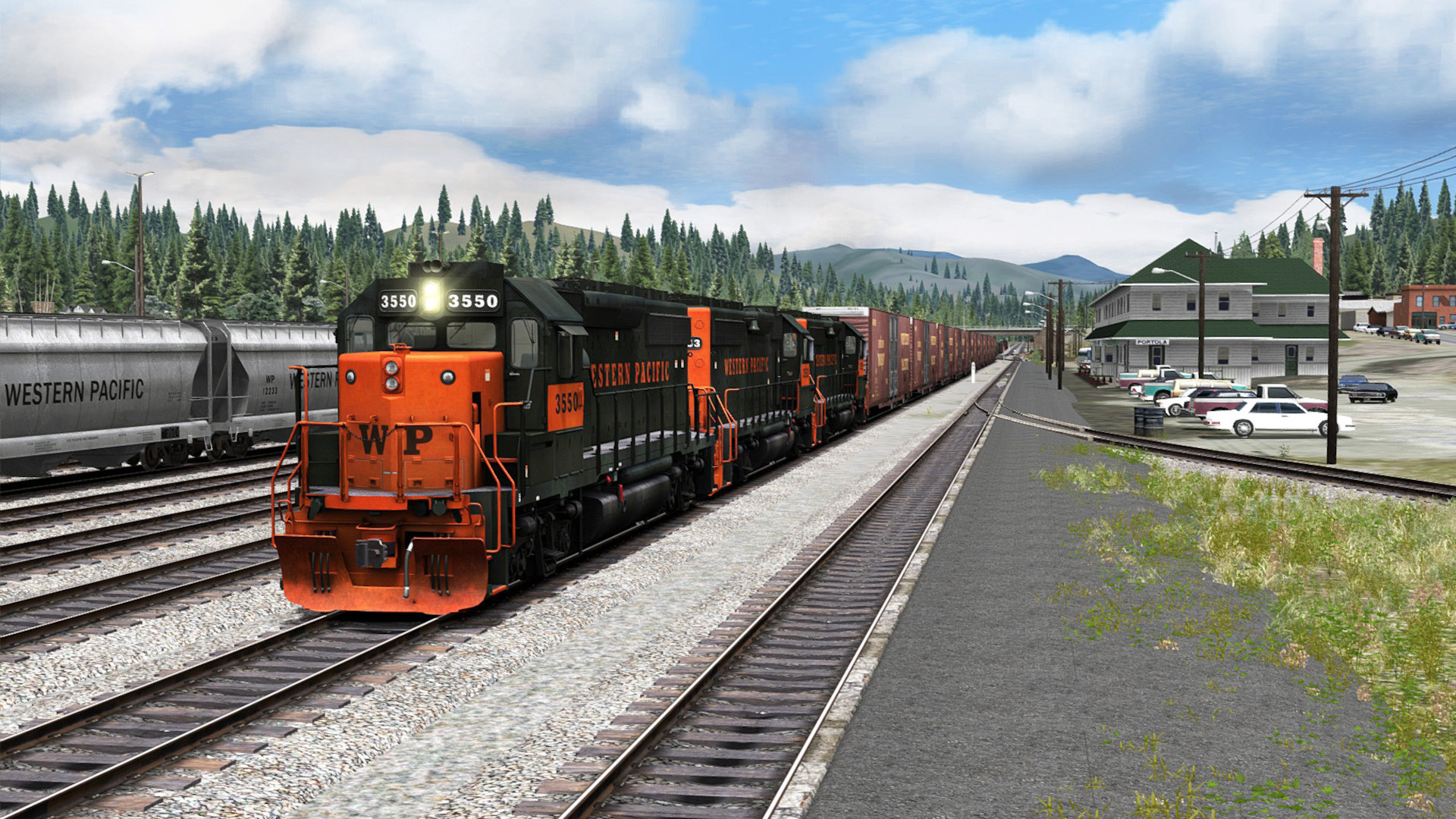
Soon, in an expanded and enhanced edition created through a collaboration of Dovetail Games and High Iron Simulations, the extraordinary Western Pacific through Feather River Canyon is coming to Train Simulator Classic! At Portola, the eastern terminus of Western Pacific’s Third Subdivision and the new route, a trio of WP EMD GP40-2s are highballing the hot “Ford Fast” eastbound. Note that screenshots may depict content while in development.
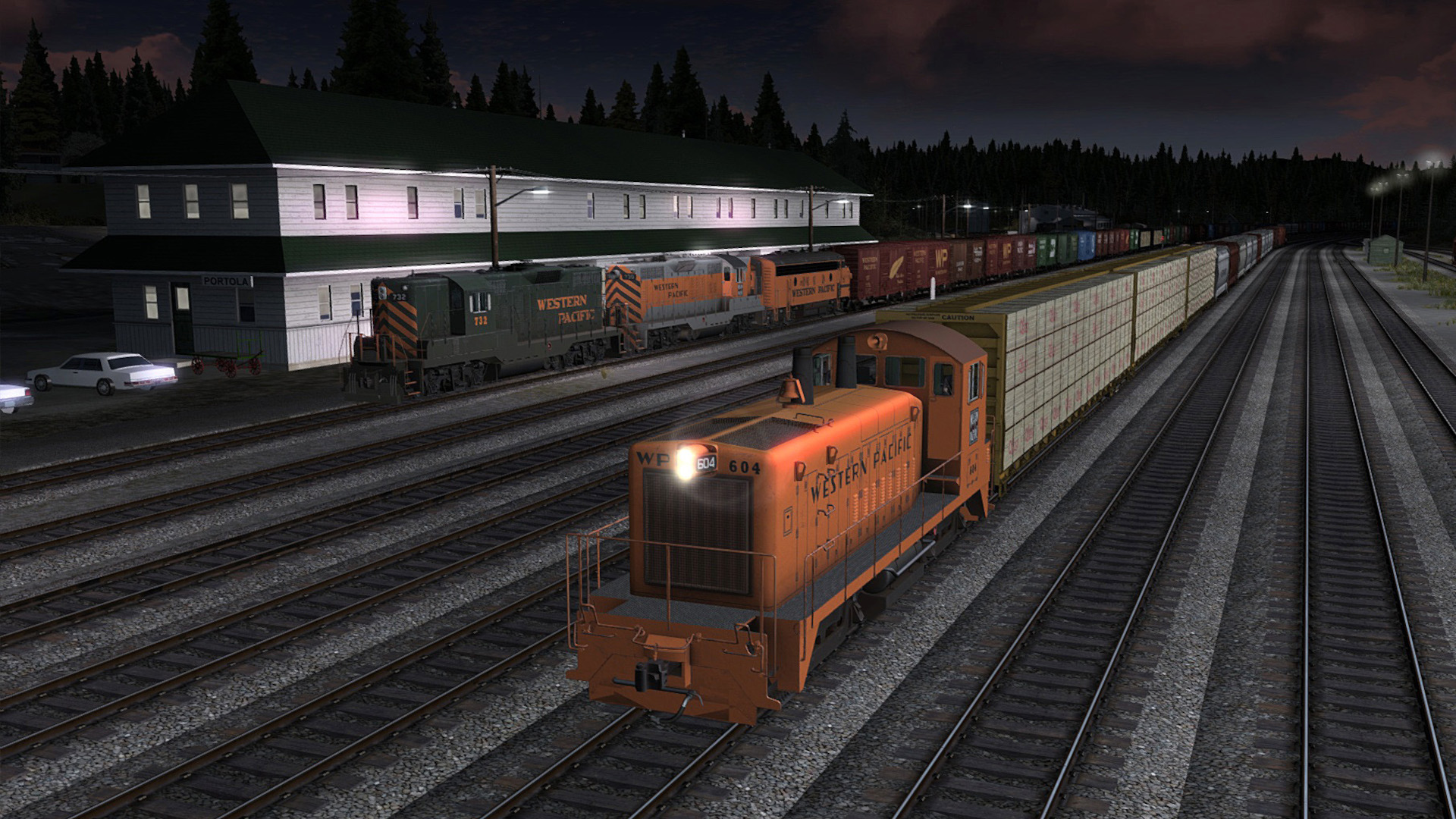
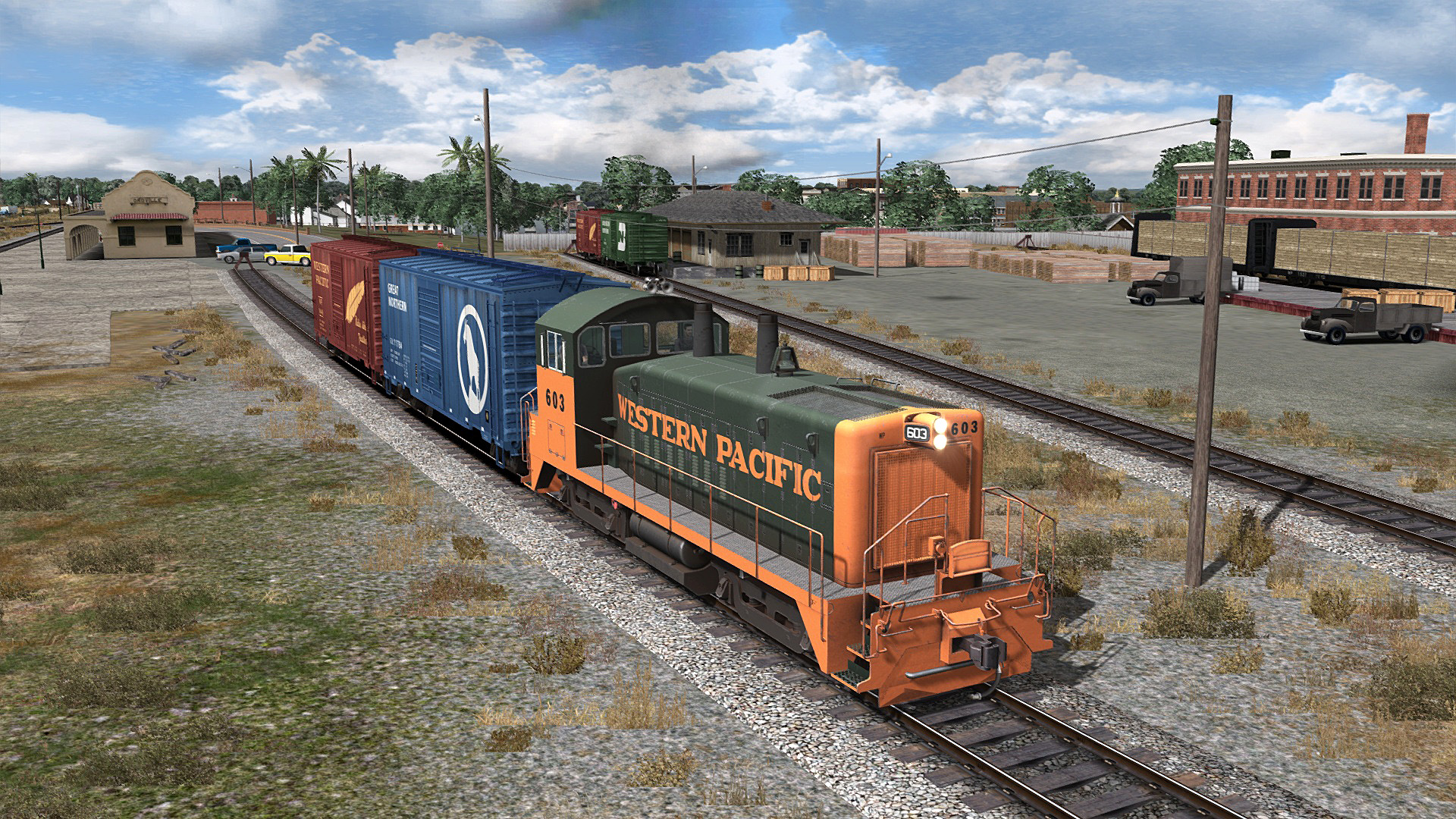
Portola was a key operating point on the WP with large yard, engine and repair facilities, and a large depot. An eastbound WP freight is awaiting its new crew alongside the depot as a WP SW9 in “pumpkin” livery switches the ever-busy yard.
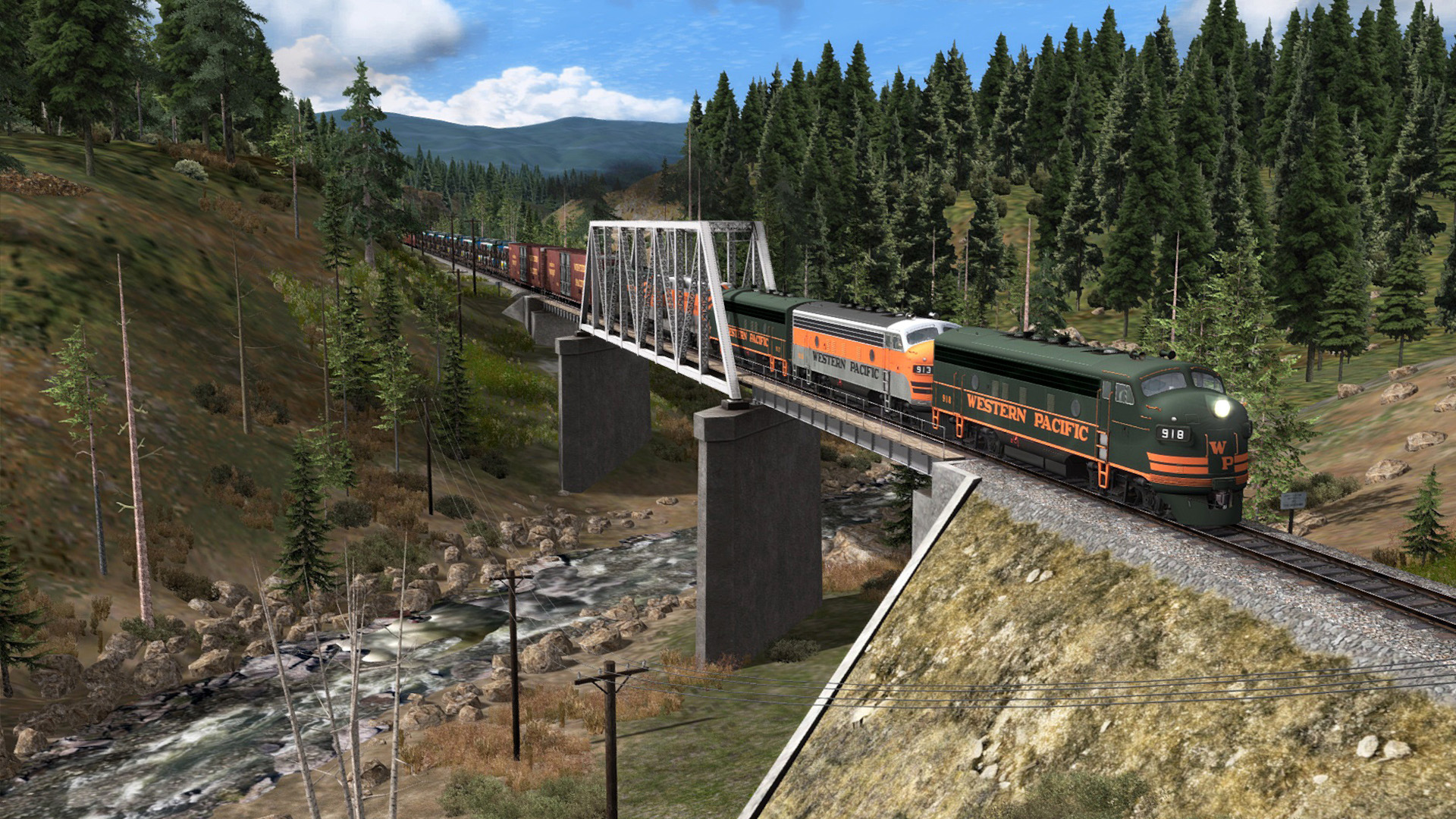
Along immediately west of Portola, the railroad begins its path along the Feather River. Near Mabie, Western Pacific EMD F7 918 is leading tonnage across the Middle Fork of the Feather River as the railroad ascends Beckworth Pass.
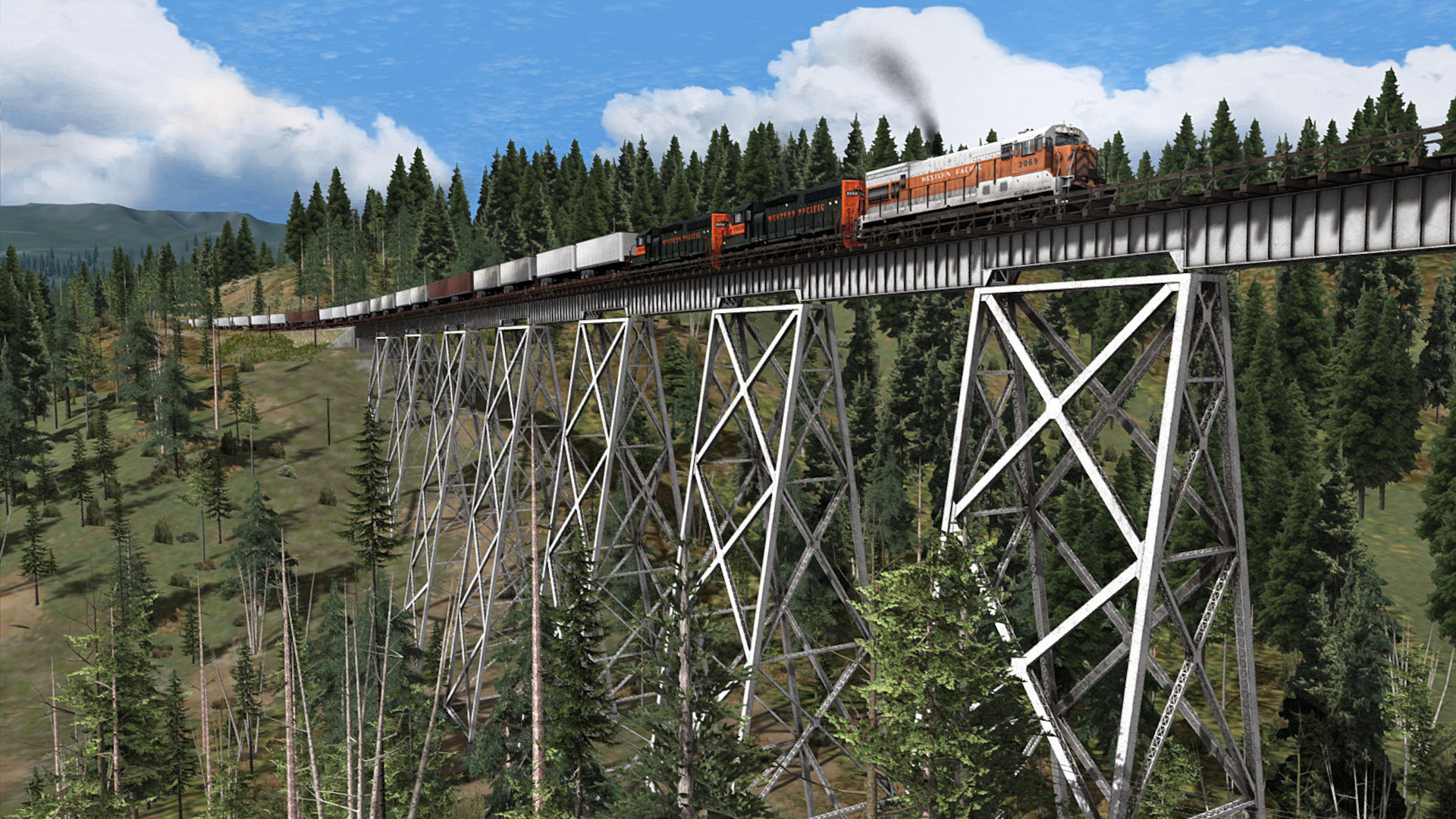
A long-time siren for train enthusiasts and tourists alike has been Western Pacific’s Clio Trestle, which stands 172-feet tall and stretches 1,000 feet in length. With an intermodal train in tow, a Western Pacific General Electric U30B and two EMD GP40-2s are eastbound. Priority piggybacks, such as the Overland Mail East (symbol OME), were a key feature of Western Pacific operations.
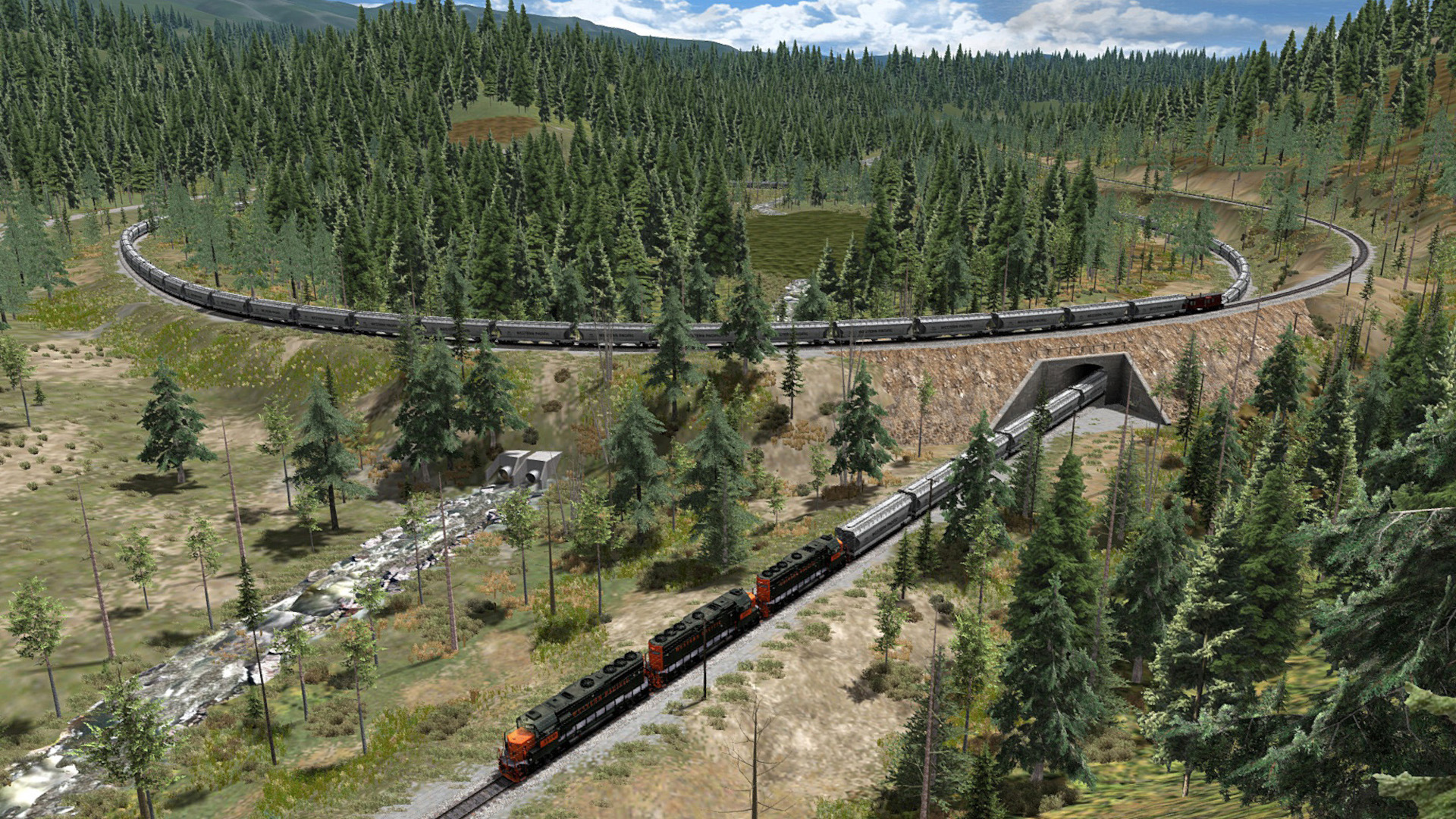
One of the engineering marvels of the WP’s passage through Feather River Canyon and over Beckworth Pass is Williams Loop. Much like Tehachapi Loop on the Southern Pacific, Western Pacific’s Williams Loop is a full spiral, allowing the railroad to gain altitude with moderate grades. A unit train powered by a trio of Western Pacific EMD GP40-2s is descending the loop.
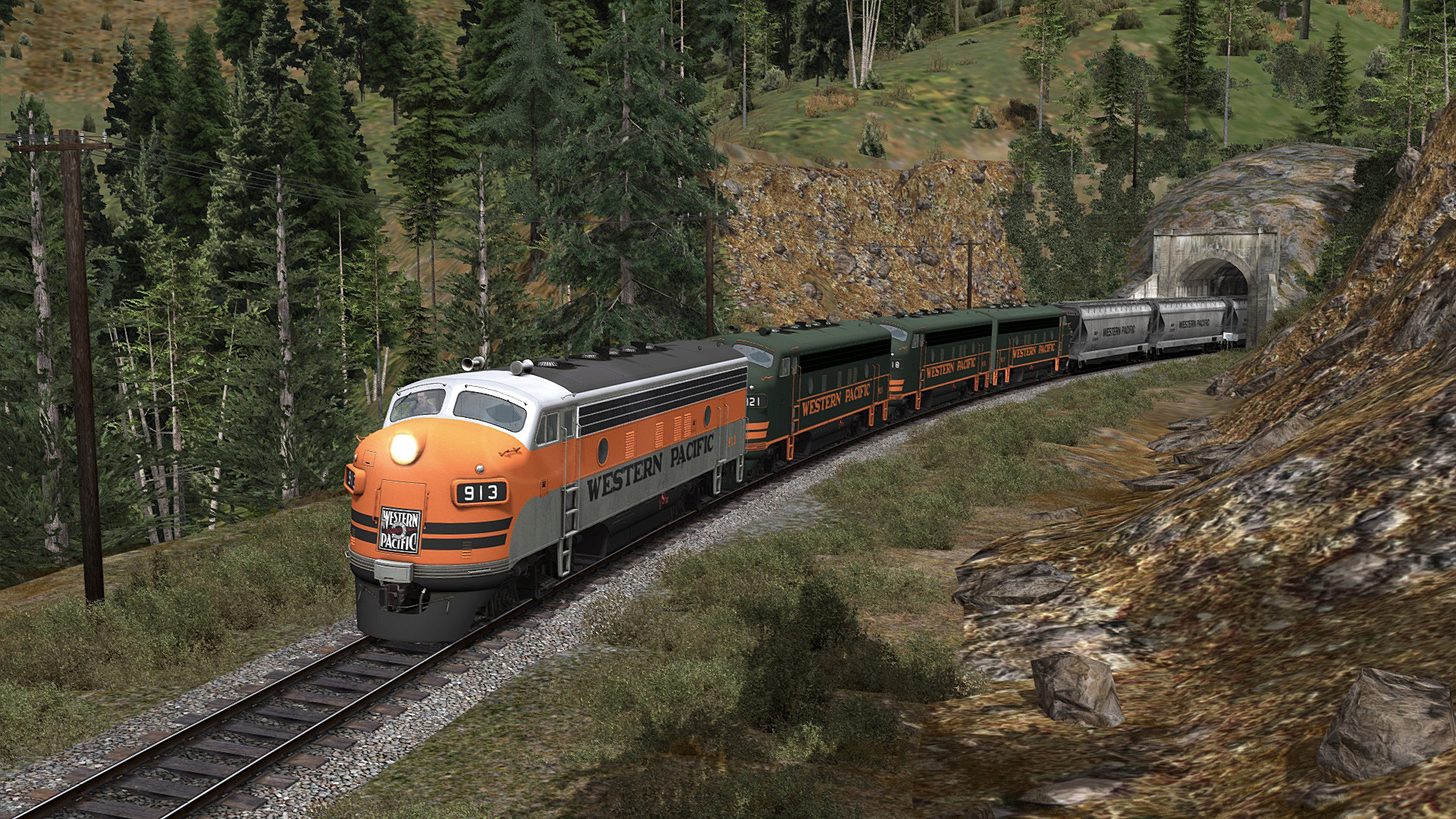
To make its passage of the daunting and tough Feather River Canyon, the Western Pacific called upon countless, often lengthy, tunnels. Between Spring Garden and Sloat, Western Pacific’s “Fab Four” F-units have just emerged from 7,343-foot-long Tunnel No. 35.
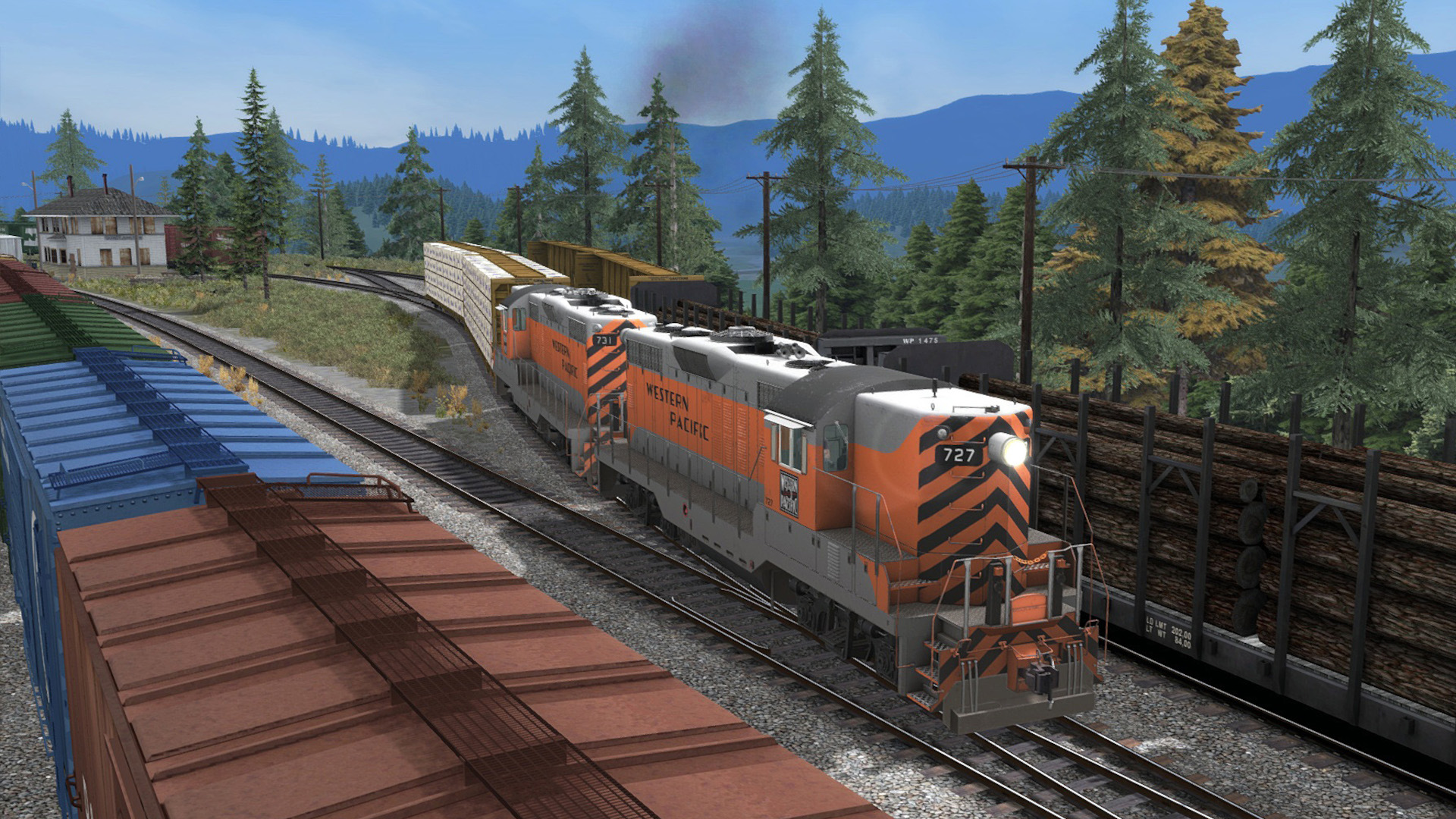
At Quincy Junction, the Western Pacific connected and interchanged with the 4-mile Quincy Railroad, which provided a steady flow of lumber tonnage. The Western Pacific’s aged Quincy Junction depot is closed but still standing as a pair of WP EMD GP9s switch the interchange tracks.
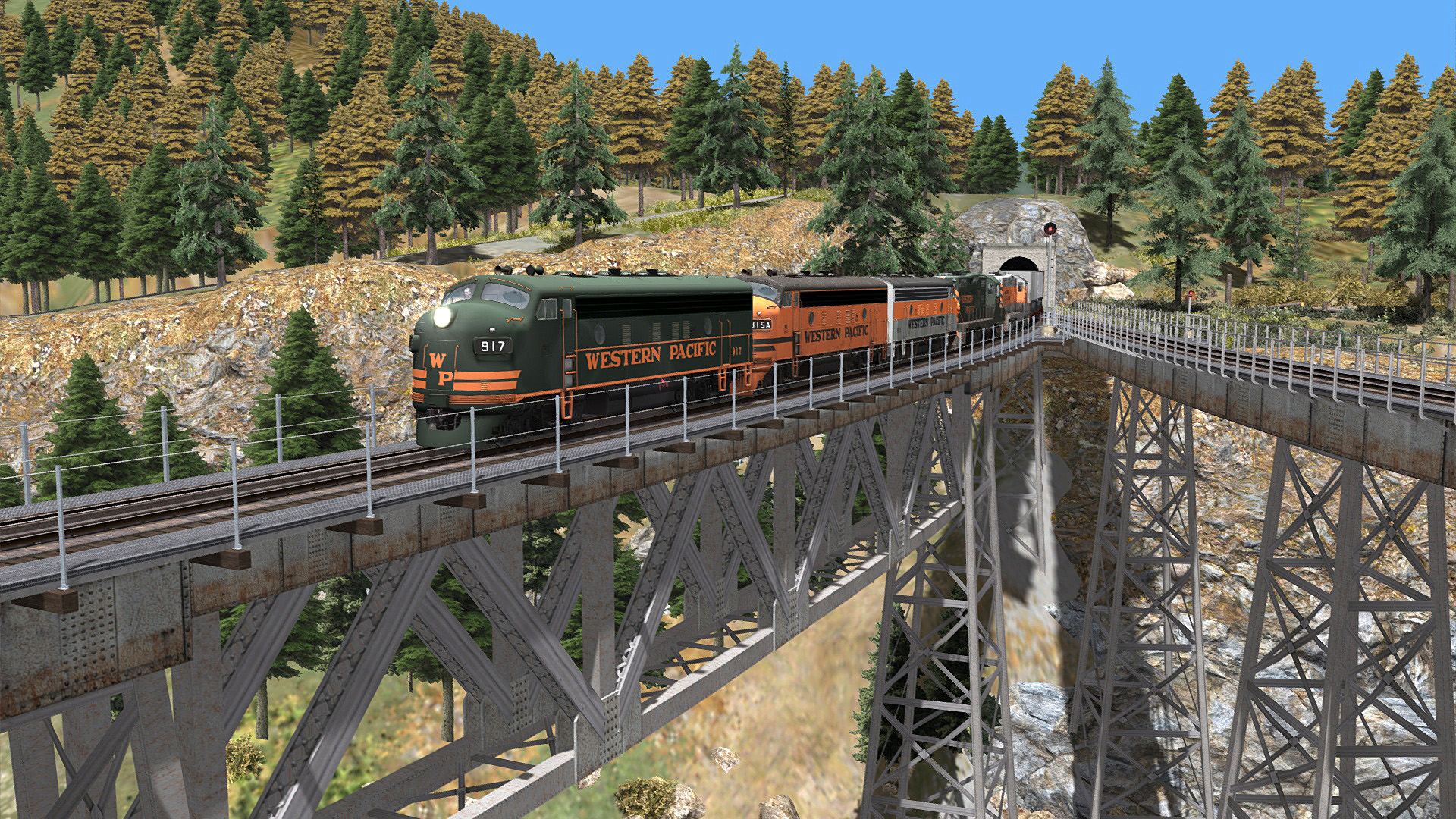
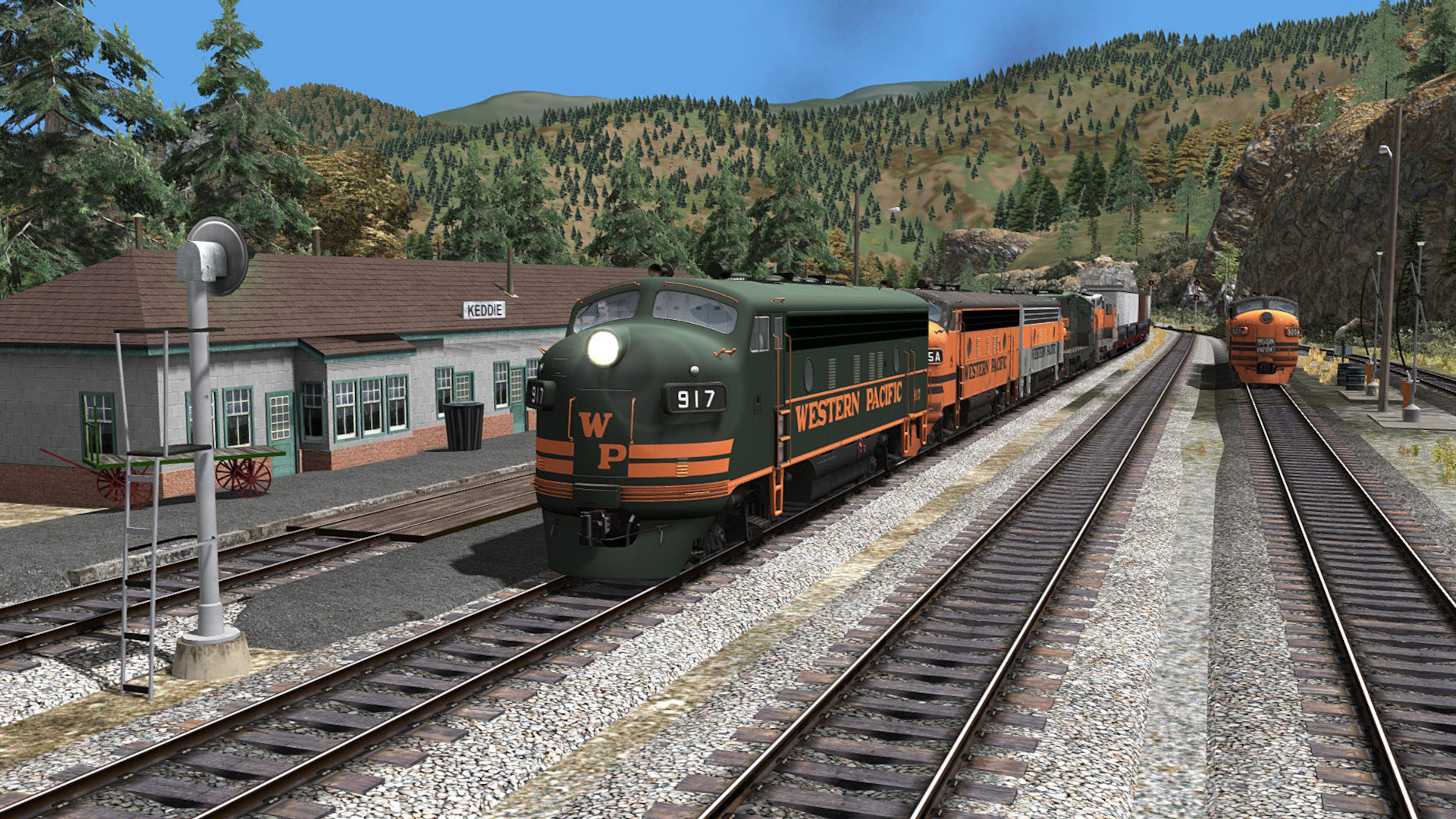
On a railroad of famous places, Keddie was perhaps the most famous. Keddie’s fame is in no small part based on magnificent and unique Keddie Wye Trestle (above), which served to join the Third Subdivision and the Fourth Subdivision (“Inside Gateway”). Keddie also hosted a handsome depot, fueling facilities, and a yard (below).
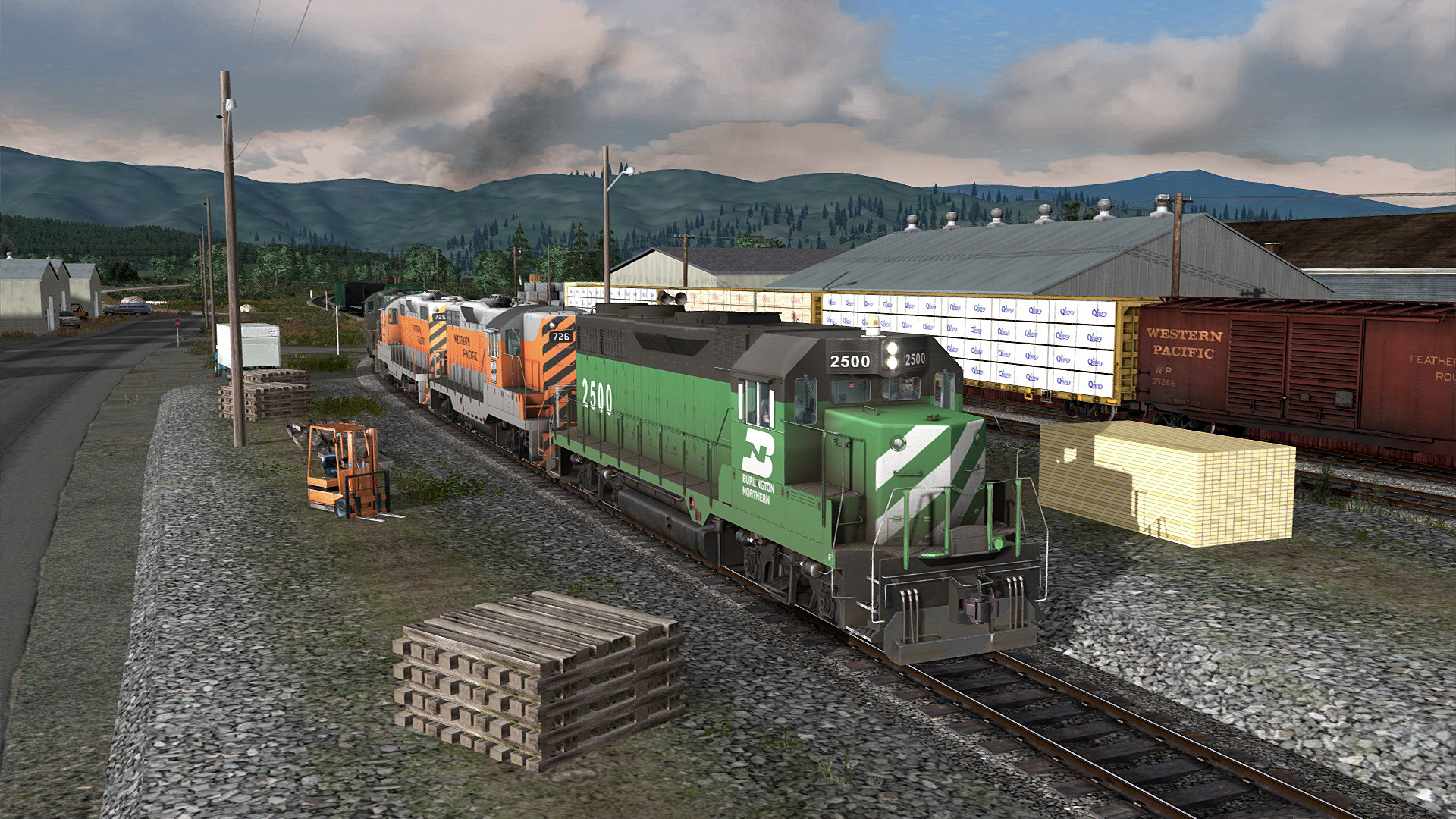
Extending north from Keddie was Western Pacific’s Fourth Subdivision (also known as the Inside Gateway and Highline), which featured joint Western Pacific-Burlington Northern operations. Like much of the Feather River Canyon route, the Inside Gateway also provided lumber tonnage, and a lash-up of BN and WP power is making a lumber pick-up at Crescent Mills.
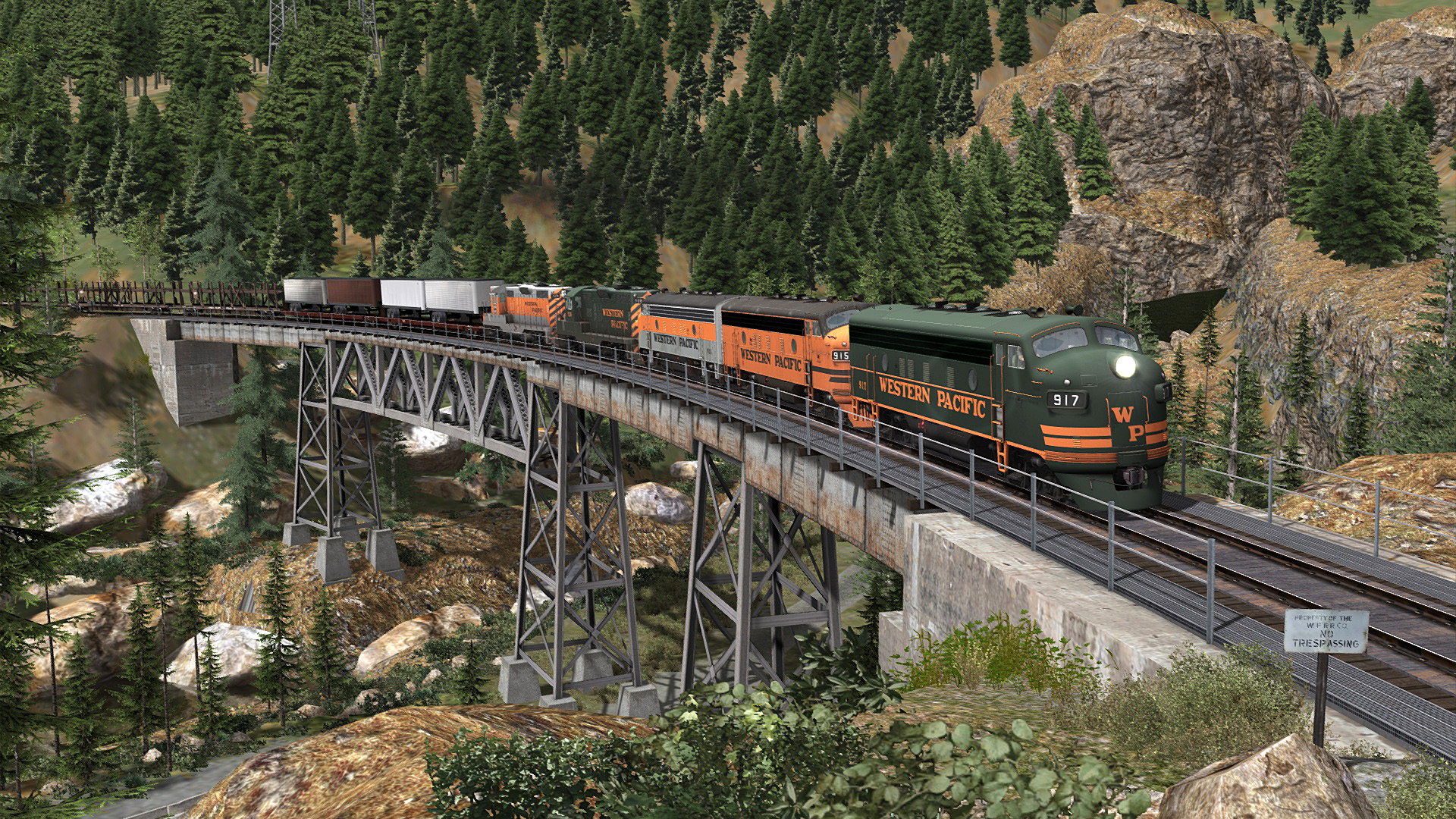
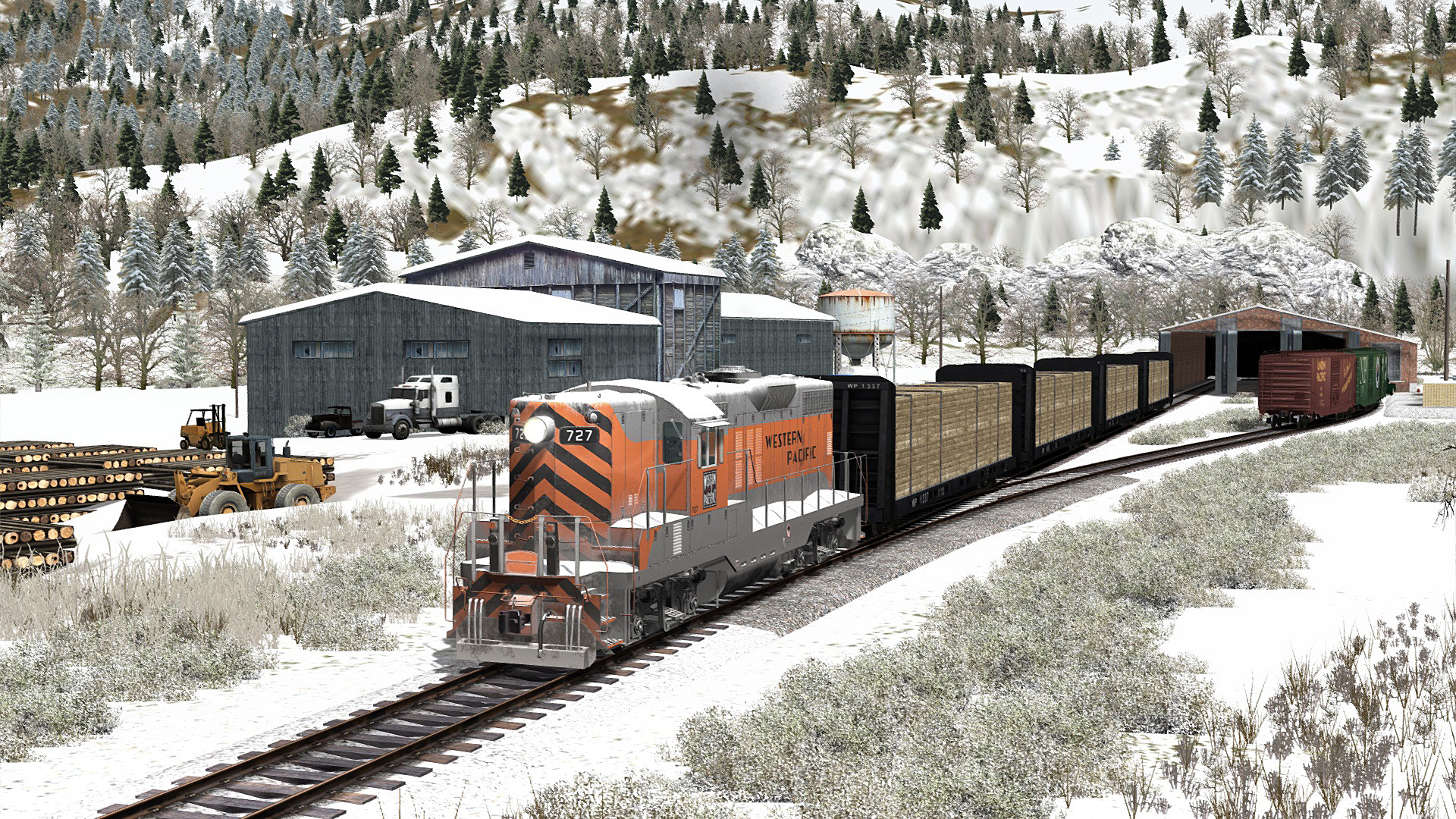
Amid the heart of the Feather River Canyon one could encounter scenic splendor, such as the dramatic curved steel trestle at Rock Creek (above) and also the railroad going about the business of handling freight, such as at Grays Flat, where an attractive orange-and-silver clad Western Pacific EMD GP9 is switching a lumber load on a winter day (below).
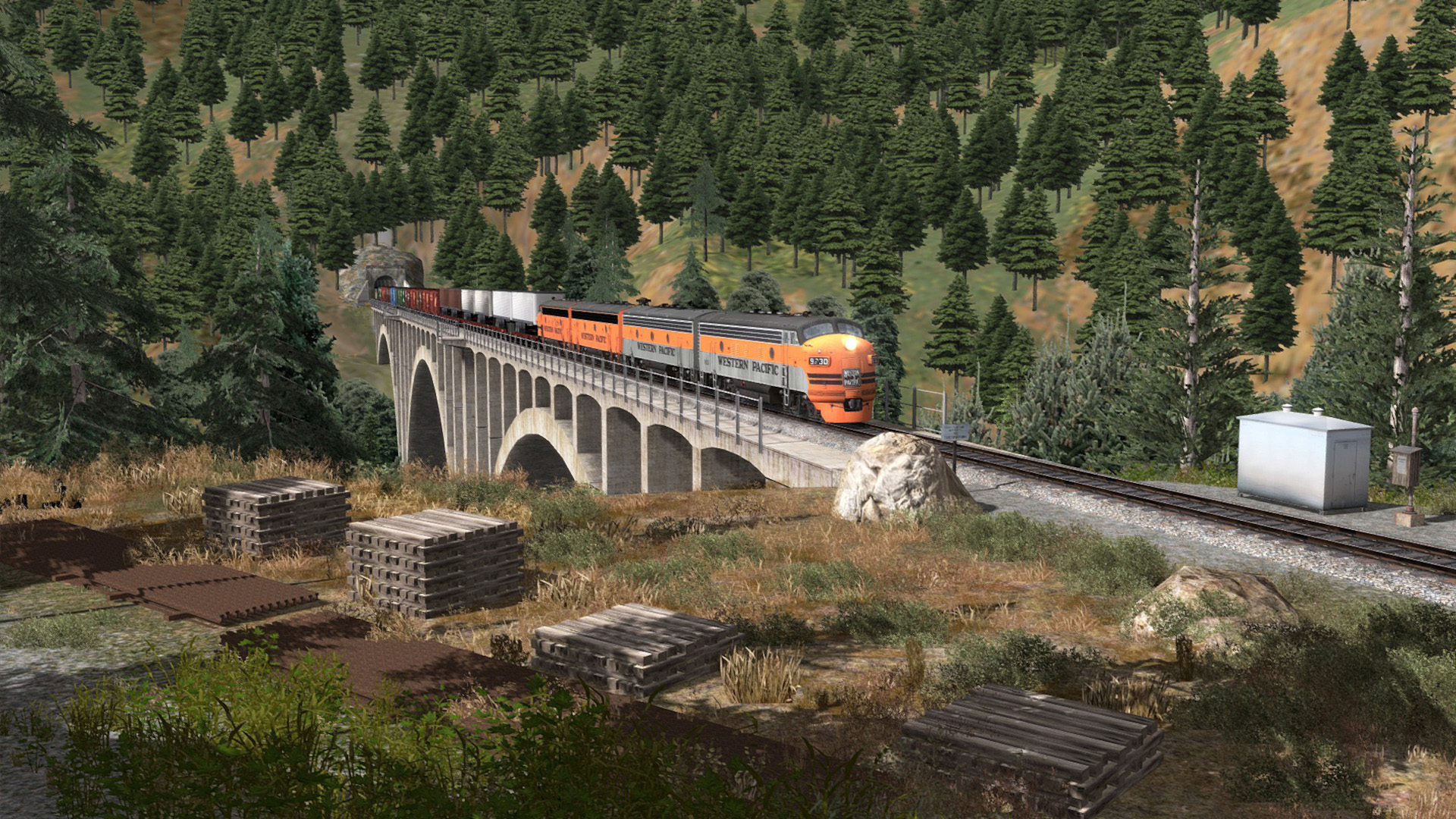
In the early 1960s, due to the construction of the Oroville Dam and Lake Oroville, the western portion of the WP’s Third Subdivision was relocated. It was at the east end of the newly built North Fork Bridge, a spectacular concrete arch structure, that the new and old lines met. An eastbound set of Western Pacific EMD F7s has just emerged from 8,830-foot-long Tunnel No. 8 onto the imposing North Fork Bridge.
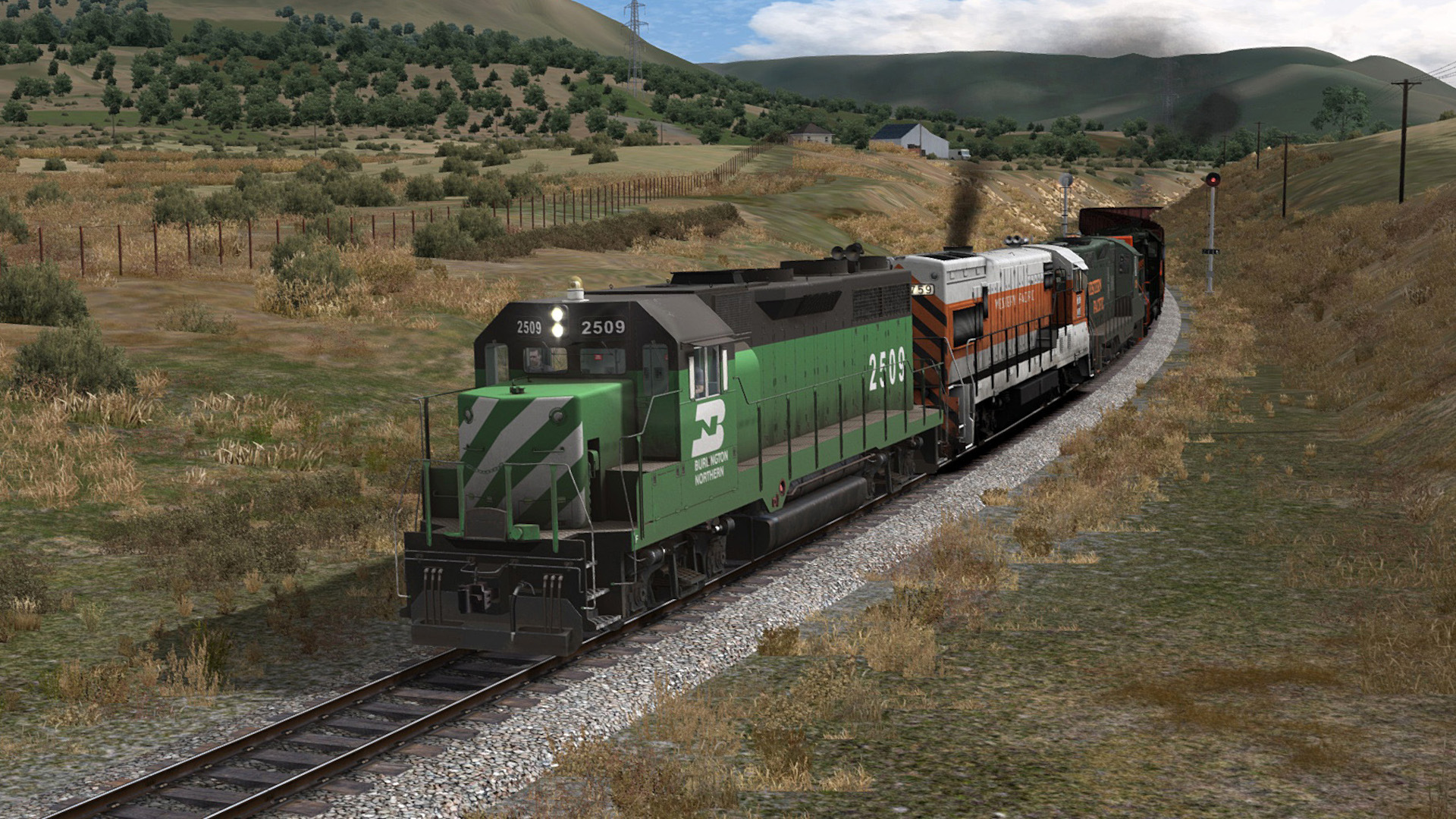
On the relocated main line east of Oroville, an eastbound manifest bound for the Inside Gateway is climbing upgrade through an area that sees no snow and seasonal showers. This portion of Western Pacific’s Third Subdivision was relocated in the early 1960s due to the construction of Lake Oroville.
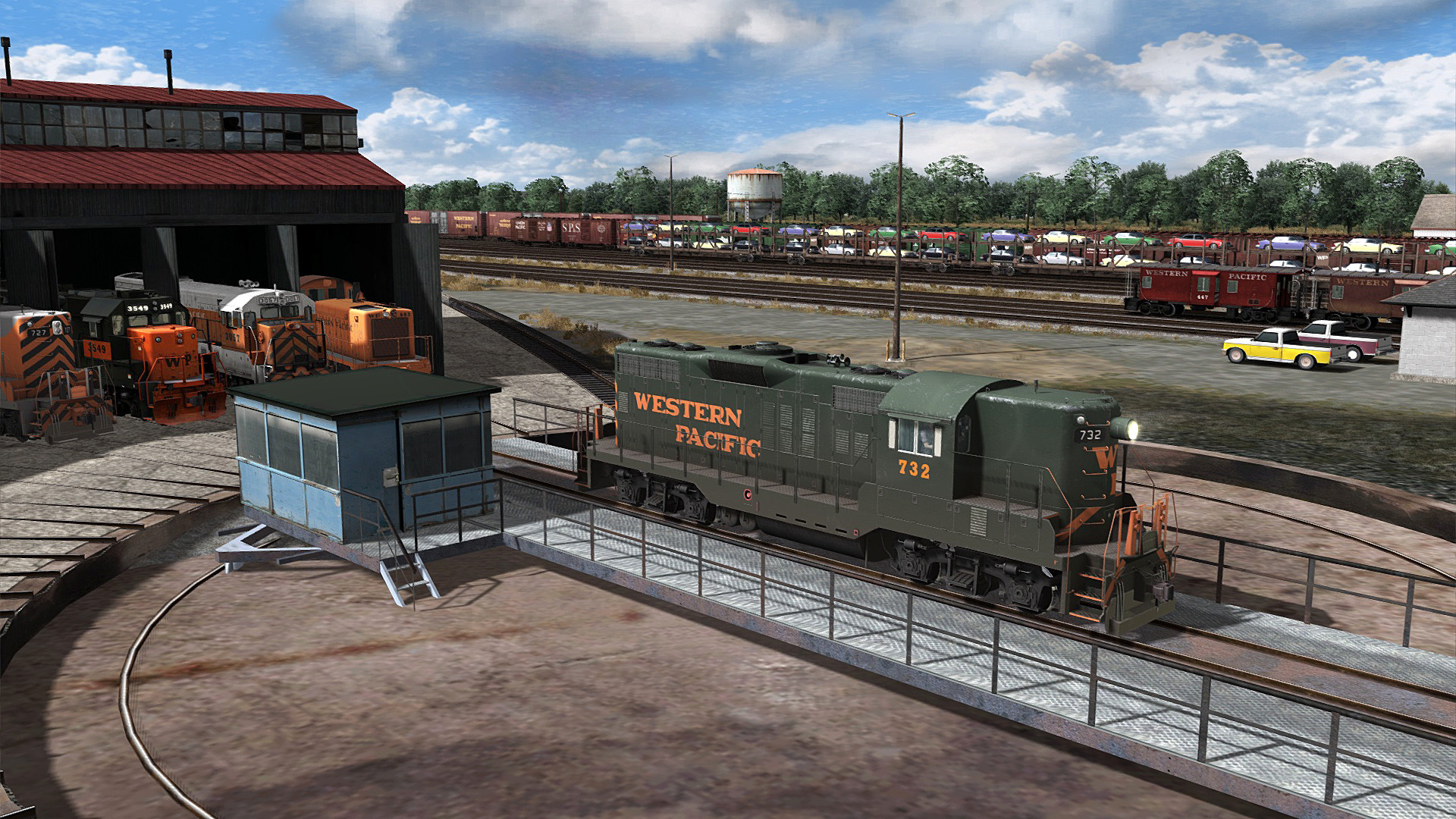
A key operation point on the Western Pacific, Oroville stood at the west end of the Third Subdivision. Home to a yard, servicing facilities, and a roundhouse (above), Oroville was also home to a distinctive station, a freight house, and more than a half-dozen lineside industries. With the Oroville passenger and freight stations in the background, a WP SW9 handles switching chores (below).
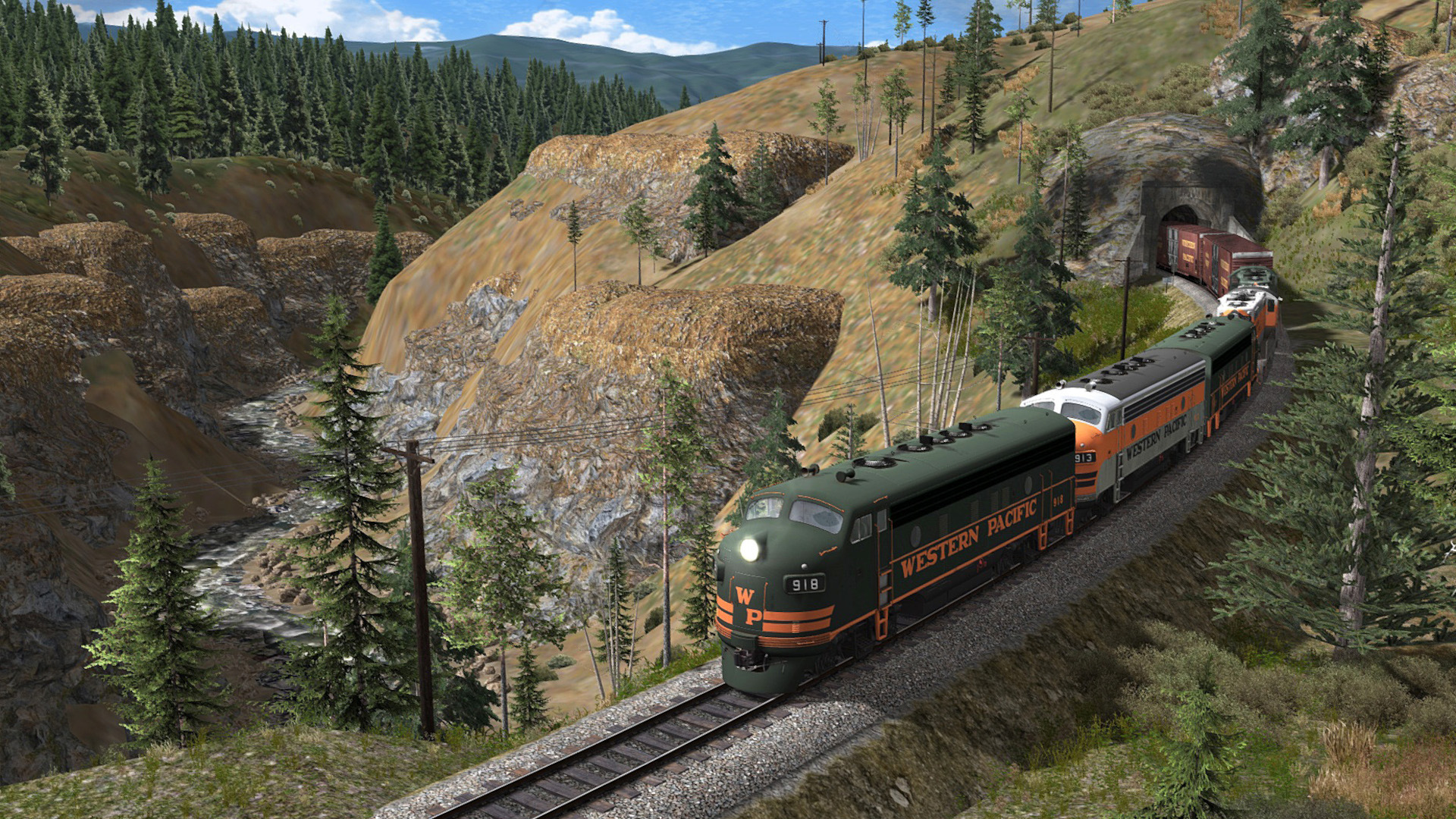
In a classic image of Feather River Canyon railroading, five first-generation Western Pacific diesels climb eastbound. The Feather River Canyon Enhanced Route – featuring remarkable Western Pacific, and Burlington Northern, railroading along a detail-rich and authentic 130-mile route – is coming soon to Train Simulator Classic!